
Table of Contents
- What Hormonal Imbalance Actually Looks Like
- Top Herbal Supplements for Hormonal Balance
- Herbal Supplements for PMS Relief: Symptom-Specific Mapping
- Vitamins and Minerals That Support the Endocrine System
- How to Balance Hormones Naturally: Lifestyle Strategies That Work
- Safety of Herbal Supplements for Women: What You Need to Know
- How to Choose a High-Quality Herbal Supplement
- Conclusion
Last Updated: August 18, 2026
What Hormonal Imbalance Actually Looks Like
Hormonal imbalance occurs when the body produces too much or too little of one or more hormones, disrupting the endocrine system’s ability to regulate metabolism, mood, sleep, and reproductive health. Many women spend years attributing their symptoms to stress or aging when the underlying issue is hormonal. This guide breaks down what hormonal imbalances look like, which herbal supplements for hormonal balance have the strongest botanical medicine backing, and how to choose and use them safely.
5 Signs Your Hormones May Be Off
Recognizing hormonal disruption early makes a meaningful difference in how you address it. These are the most common signals:
- Irregular or painful periods, cycles that arrive early, late, or not at all, or cramping severe enough to interfere with daily life
- Persistent fatigue, exhaustion that doesn’t improve with rest, often linked to adrenal fatigue or thyroid dysfunction
- Mood instability, unexplained anxiety, irritability, or low mood tied to shifts in estrogen and progesterone
- Weight changes without dietary cause, especially around the abdomen, often connected to cortisol regulation and blood sugar issues
- Skin and hair changes, acne, hair thinning, or dryness that tracks with your cycle or worsens over time
If several of these overlap, the pattern matters more than any single symptom.
Top Herbal Supplements for Hormonal Balance
Herbal supplements for hormonal balance work by modulating cortisol, mimicking or blocking estrogen activity, supporting thyroid function, and reducing systemic inflammation. Matching the herb to the symptom is more effective than a one-size-fits-all approach.
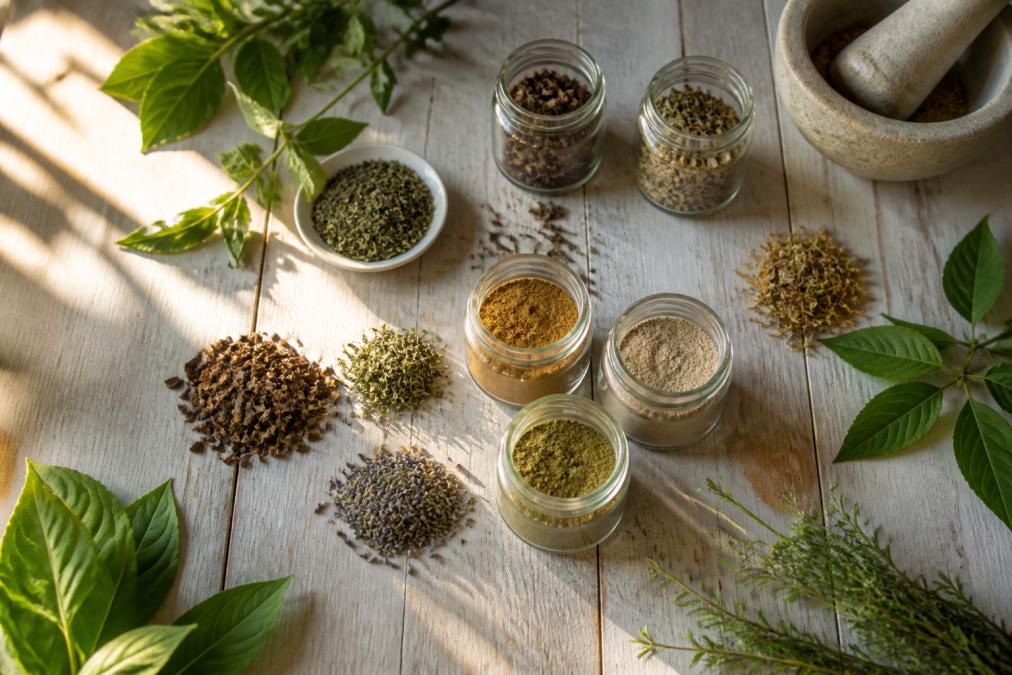
Adaptogens: Ashwagandha, Maca, and Rhodiola
Adaptogenic herbs help the body resist physical and psychological stress by normalizing cortisol regulation and supporting adrenal function.
Ashwagandha is the most clinically examined adaptogen for hormonal support. It works on the hypothalamic-pituitary-adrenal axis, helping regulate the stress response that drives adrenal fatigue and elevated cortisol. Many women report improvements in sleep quality, anxiety, and energy within four to eight weeks of consistent use.
Maca root does not contain hormones but may influence serum hormone levels indirectly through the endocrine system. It has a particular reputation for supporting libido, energy, and mood during perimenopause.
Rhodiola rosea is best positioned for cognitive fatigue and mood, particularly when stress is the primary driver of hormonal disruption.
| Herb | Primary Action | Best For |
|---|---|---|
| Ashwagandha | Cortisol regulation, adrenal support | Stress-driven fatigue, anxiety, sleep |
| Maca Root | Endocrine modulation, energy | Perimenopause, libido, mood |
| Rhodiola | Oxidative stress, cognitive fatigue | Burnout, mood instability |
| Chasteberry | Progesterone support | PMS, luteal phase symptoms |
| Black Cohosh | Phytoestrogen activity | Menopause symptoms, hot flashes |
| Red Clover | Phytoestrogens | Estrogen dominance, perimenopause |
| Shatavari | Reproductive health, thyroid support | Cycle regulation, hormonal transitions |
Phytoestrogenic Herbs: Chasteberry, Black Cohosh, and Red Clover
Phytoestrogenic herbs contain plant compounds that interact with estrogen receptors in the body. They do not add synthetic hormones but can modulate estrogenic activity.
Chasteberry (Vitex agnus-castus) is the most established herb for progesterone support and PMS relief. It acts on the pituitary gland to support luteinizing hormone production, which indirectly raises progesterone levels during the luteal phase.
Black cohosh has a long history of use for menopause symptoms, including hot flashes, night sweats, and mood changes. It appears to act on serotonin pathways as much as estrogenic ones.
Red clover contains isoflavones, a class of phytoestrogens, and is often used to address menopause symptoms and estrogen dominance. Standardized extracts show more consistent results than whole-plant preparations.
Phytoestrogenic herbs are not interchangeable. Chasteberry supports progesterone; red clover and black cohosh act more on estrogenic pathways. Mixing them without understanding the distinction can work against you if your imbalance is already estrogen-dominant.
Thyroid and Adrenal Support: Ashwagandha and Shatavari
Thyroid support and adrenal health are tightly linked. Chronic stress depletes adrenal function, which suppresses thyroid output, which worsens fatigue and metabolic health.
Ashwagandha has shown promise for thyroid support in addition to its adrenal benefits, particularly for hypothyroid patterns. Shatavari (Asparagus racemosus) is an Ayurvedic herb with a strong profile for reproductive health and hormonal transitions. It supports estrogen activity gently and is often used for cycle regulation and managing the hormonal shifts of perimenopause.
Herbal Supplements for PMS Relief: Symptom-Specific Mapping
The biggest mistake in choosing herbal supplements for PMS relief is treating PMS as a single condition. Matching the herb to the symptom produces better outcomes than taking a general "hormonal support" blend.
Cramping and Inflammation
Menstrual cramping is largely driven by prostaglandins, inflammatory compounds that trigger uterine contractions. Ginger has strong anti-inflammatory properties and is one of the better-studied natural remedies for dysmenorrhea. Turmeric, via its active compound curcumin, works similarly and supports gut-hormone axis health. These herbs work best as a preventive, daily-use strategy rather than an emergency intervention.
Mood Swings, Anxiety, and Sleep Disruption
Mood instability in the luteal phase is closely tied to drops in progesterone and the downstream effect on GABA and serotonin activity. Chasteberry addresses this at the hormonal level. For acute anxiety and sleep disruption, adaptogenic herbs like ashwagandha and lemon balm are more immediately relevant. Magnesium glycinate and threonate forms also support sleep architecture.
Bloating and Fatigue
Premenstrual bloating is driven by estrogen-related fluid retention and gut-hormone axis disruption. Dandelion root acts as a gentle diuretic and supports liver detoxification, which is directly relevant to estrogen clearance. Fatigue in the premenstrual and menstrual phases often reflects iron depletion and adrenal strain. Nettle leaf is a high-mineral herb that supports iron levels naturally.
Vitamins and Minerals That Support the Endocrine System
Nutrient deficiencies are frequently the reason herbs fail to work. The endocrine system requires specific micronutrients to synthesize and metabolize hormones properly.
Magnesium is the most commonly depleted mineral in women with PMS. It supports over 300 enzymatic reactions, including those involved in cortisol regulation and progesterone synthesis.
Vitamin D functions more like a hormone than a vitamin and is essential for reproductive health and immune regulation. Deficiency is strongly associated with irregular cycles and mood disorders.
B6 is critical for progesterone support and serotonin synthesis. Zinc supports thyroid function and is involved in progesterone production. Iodine is essential for thyroid hormone synthesis, though excess iodine can worsen thyroid conditions.
Vitamins and minerals are not optional additions to a hormonal support protocol, they are the foundation. Herbs work more effectively when the underlying nutrient deficiencies are addressed first.
How to Balance Hormones Naturally: Lifestyle Strategies That Work
No herbal supplement works in isolation. How to balance hormones naturally requires addressing the lifestyle factors that drive hormonal disruption in the first place, otherwise you are managing symptoms rather than changing the conditions that create them.

Sleep and circadian rhythm sit at the top of the list. Melatonin, cortisol, and reproductive hormones all follow circadian patterns. Consistent sleep and wake times are more effective than any supplement for cortisol regulation.
Blood sugar stabilization is underrated in hormonal health conversations. Insulin resistance drives androgen production, worsens estrogen dominance, and amplifies PMS symptoms. Eating protein and fat at each meal and reducing refined carbohydrates support hormonal homeostasis.
Exercise is effective but dose-dependent. Moderate movement, particularly strength training and walking, supports cortisol regulation and metabolic health. Excessive high-intensity training without adequate recovery raises cortisol and can suppress reproductive hormones.
Stress management is not a soft recommendation. Chronic stress is one of the primary drivers of adrenal fatigue and hormonal disruption. Practices that activate the parasympathetic nervous system, including breathwork, yoga, and time in nature, have measurable effects on cortisol and systemic inflammation.
Safety of Herbal Supplements for Women: What You Need to Know
"Natural" does not mean risk-free. Many botanical compounds are pharmacologically active, which is precisely why they work, and that activity can interact with medications and medical conditions.
Drug-Herb Interactions: Birth Control, Thyroid Medication, and More
St. John’s Wort induces CYP3A4 liver enzymes, which accelerates the metabolism of many drugs including oral contraceptives, reducing their effectiveness.
Chasteberry may interact with dopamine-related medications and hormonal contraceptives. Its effect on the pituitary gland means it can theoretically interfere with the hormonal mechanisms that birth control relies on.
Ashwagandha may enhance the effects of thyroid medication. Women already on levothyroxine should have their thyroid levels monitored if they add ashwagandha.
Black cohosh should be used cautiously by women with hormone-sensitive conditions, including certain types of breast cancer, until more definitive guidance is available from ongoing research.
According to the National Center for Complementary and Integrative Health, interactions between herbal supplements and prescription medications are underreported and warrant careful attention. Always disclose supplement use to your healthcare provider.
Do not assume that because an herb is sold over the counter, it is safe to combine with your current medications. Drug-herb interactions are real, and the consequences can range from reduced medication effectiveness to serious adverse effects.
FDA Regulation and Third-Party Testing
Herbal supplements in the United States are regulated as dietary supplements under the Dietary Supplement Health and Education Act (DSHEA). This means manufacturers do not need to prove efficacy or safety before bringing a product to market. The FDA’s dietary supplement guidance places the burden of post-market safety monitoring on the agency rather than requiring pre-market approval.
The quality of herbal supplements varies enormously. Third-party testing through organizations like NSF International, USP, or Informed Sport fills the gap that regulatory oversight leaves. Look for a certificate of analysis (COA) confirming identity, potency, and absence of heavy metals and contaminants.
How to Choose a High-Quality Herbal Supplement
Most of the herbs on the market are not what they claim to be. Adulteration, contamination, and mislabeling are documented problems in the supplement industry.
Standardized extracts are more reliable than whole-plant powders for clinical efficacy. A standardized extract guarantees a specific concentration of the active compound, such as 5% withanolides in ashwagandha.
Bioavailability matters. Some compounds require specific delivery forms or co-factors to be absorbed effectively. Curcumin, for example, has poor bioavailability on its own and requires piperine or a liposomal delivery system to reach therapeutic levels.
Synergistic formulations that combine complementary herbs and nutrients can produce better outcomes than single-herb products, provided the formulation is designed with dosage precision rather than marketing appeal.
cycle 180 provides an all-natural powdered supplement that combines herbs, vitamins, and minerals in a single daily format designed specifically for menstrual wellness and hormonal support throughout the monthly cycle.
Personalized Dosage Protocols: One Size Does Not Fit All
Therapeutic dosage is not fixed. It varies by body weight, symptom severity, the specific herb and extract type, and how your body responds over time.
A practical starting framework:
- Start low and titrate up. Begin at the lower end of the recommended range for four weeks before increasing.
- Track symptoms systematically. Keep a simple cycle journal noting energy, mood, pain, and sleep.
- Allow adequate time. Adaptogenic herbs and phytoestrogenic herbs generally require six to twelve weeks of consistent use before serum hormone levels and symptom patterns shift meaningfully.
- Cycle timing matters. Some herbs, like chasteberry, are most effective when taken consistently throughout the cycle rather than only during the symptomatic phase.
- Consult a practitioner for complex cases. Women with diagnosed thyroid conditions, PCOS, endometriosis, or who are on multiple medications should work with a naturopathic doctor or integrative physician to develop a personalized protocol.
Hormonal imbalance affects quality of life in ways that are often dismissed or misattributed. Botanical medicine, combined with targeted nutritional support and lifestyle changes, offers a meaningful path to hormonal homeostasis. cycle 180’s all-in-one powdered supplement is designed for exactly this purpose: a daily, drinkable ritual that brings together the herbs, vitamins, and minerals most relevant to menstrual wellness and cycle support. Visit the cycle 180 website to review current formulation details and get started with a protocol built for your cycle.
Frequently Asked Questions
What is the best herb for hormonal imbalance?
No single herb works best for every woman because the right choice depends on your specific symptoms. Chasteberry (Vitex) is widely used for estrogen dominance and PMS. Ashwagandha is favored when stress and cortisol dysregulation are driving the imbalance. Maca root is popular for perimenopause symptoms. The most effective approach pairs the herb to the symptom pattern rather than relying on a one-size-fits-all recommendation.
How long does it take to see results from herbal hormonal support?
Most herbal supplements for hormonal balance require consistent daily use for 2 to 3 full menstrual cycles before noticeable changes appear. Adaptogens like ashwagandha may show stress-related benefits within 4 to 8 weeks. Herbs that work on the endocrine system, such as chasteberry, typically need 3 months of uninterrupted use. Skipping doses or stopping early is the most common reason women report that supplements did not work for them.
Are herbal supplements for hormonal balance regulated by the FDA?
Herbal supplements fall under the Dietary Supplement Health and Education Act (DSHEA) of 1994, which means the FDA does not evaluate them for safety or effectiveness before they go to market. Manufacturers are responsible for ensuring their products are safe. Because of this, third-party testing from organizations like NSF International, USP, or Informed Sport is the most reliable way to confirm that a supplement contains what its label claims and is free from contaminants.
Can herbal supplements interact with birth control or other medications?
Yes, and this is one of the most under-discussed risks. St. John's Wort is the most documented example: it activates liver enzymes that can reduce the blood concentration of hormonal contraceptives, potentially reducing their effectiveness. Some phytoestrogenic herbs may also interact with hormone-sensitive medications. Women taking hormonal birth control, thyroid medication, blood thinners, or antidepressants should consult a healthcare provider before starting any herbal supplement regimen.
Can herbal supplements replace hormone replacement therapy (HRT)?
Herbal supplements are not a clinical substitute for hormone replacement therapy. For women with moderate to severe menopause symptoms or confirmed hormonal deficiencies, HRT remains the most evidence-backed medical option. Herbal supplements can serve as complementary support for milder symptoms or for women who prefer to avoid pharmaceutical HRT, but the decision should be made with a healthcare provider who can review your serum hormone levels and full health history.
What are the five most common signs of hormonal imbalance?
The five signs that appear most frequently are: irregular or missed menstrual cycles, persistent fatigue that does not improve with rest, unexplained weight changes, mood disruptions including anxiety and irritability, and skin changes such as acne or dryness. These symptoms overlap with many conditions, so tracking them over several cycles and discussing patterns with a healthcare provider gives you a clearer picture than any single symptom alone.
This article was written using GrandRanker