
Table of Contents
- Estrogen Dominance Symptoms: How to Know Your Levels Are Off
- Foods That Lower Estrogen and Support Hormone Clearance
- Your Gut Microbiome and High Estrogen Levels: The Estrobolome Connection
- Lifestyle Modifications That Reduce High Estrogen Levels
- Xenoestrogens and Endocrine Disruptors in Everyday Products
- Supplements for Hormonal Balance: What the Evidence Supports
- Testing and Tracking: Knowing Where Your Estrogen Actually Stands
- Frequently Asked Questions
Last Updated: August 20, 2026
High estrogen levels affect far more women than most people realize, contributing to symptoms that range from frustrating to genuinely debilitating. The question we hear most often is a deceptively simple one: how to reduce high estrogen levels naturally, without immediately reaching for a prescription. The good news is that lifestyle, diet, gut health, and environmental awareness all move the needle in meaningful ways. Below, we break down exactly what works, why it works, and what most guides conveniently skip.
Estrogen Dominance Symptoms: How to Know Your Levels Are Off
Estrogen dominance is a state in which estrogen activity is disproportionately high relative to progesterone, whether because estrogen is genuinely elevated, progesterone is suppressed, or both. The endocrine system depends on this ratio, not just absolute numbers, which is why women with “normal” estrogen on a lab report can still experience classic dominance symptoms.
Common estrogen dominance symptoms include:
- Heavy, painful periods or irregular cycles
- Bloating and water retention, especially in the week before menstruation
- Breast tenderness or fibrocystic changes
- Mood swings, irritability, and anxiety that track with the cycle
- Fatigue that doesn’t resolve with sleep
- Weight gain concentrated around the hips and thighs
- Brain fog and difficulty concentrating
- Reduced libido
Many women spend years attributing these symptoms to stress or aging before connecting them to hormonal imbalance. If several of the above sound familiar, estrogen metabolism is worth examining directly.
Foods That Lower Estrogen and Support Hormone Clearance
Diet is the most accessible lever for hormonal regulation, and the research on foods that lower estrogen is more specific than generic “eat clean” advice suggests.
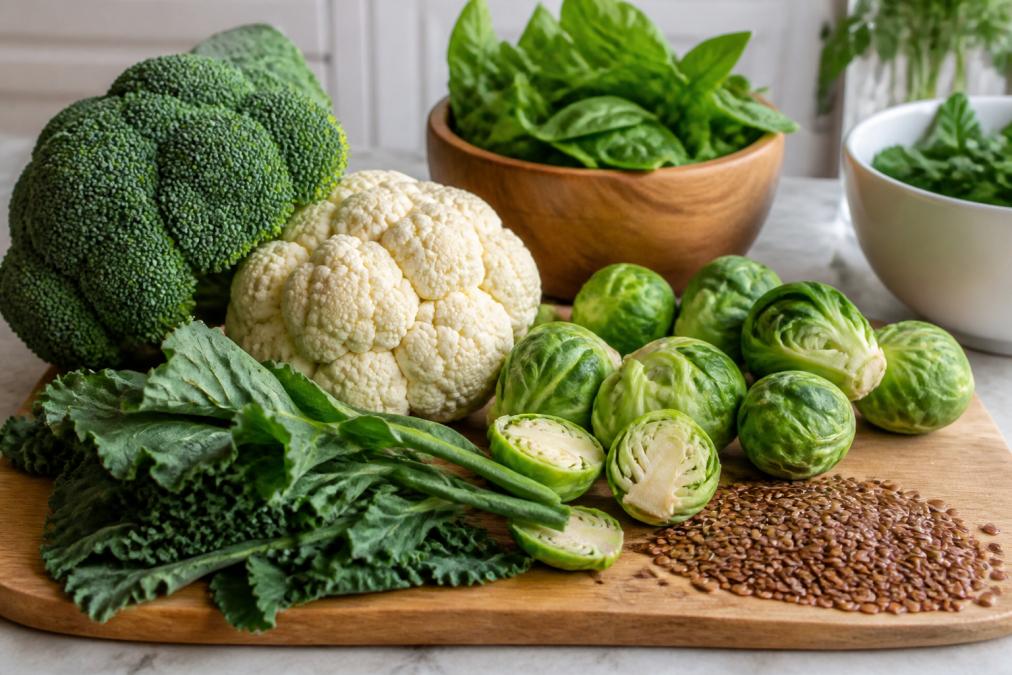
The goal isn’t simply to avoid estrogenic foods. It’s to actively support the liver’s Phase I and Phase II detoxification pathways, which are responsible for converting estradiol and estrone into water-soluble metabolites that can be excreted. Foods that support this process are genuinely different from foods that simply don’t make things worse.
Cruciferous Vegetables, DIM, and Estrogen Detoxification
Cruciferous vegetables are the most evidence-supported dietary intervention for estrogen metabolism. Broccoli, cauliflower, Brussels sprouts, kale, cabbage, and bok choy contain two compounds that directly influence estrogen clearance: DIM (diindolylmethane) and sulforaphane.
DIM is produced when you chew and digest indole-3-carbinol, a precursor found in these vegetables. It supports the liver’s conversion of potent estradiol into weaker, less proliferative estrogen metabolites. Sulforaphane activates the Nrf2 pathway, which upregulates Phase II liver enzymes responsible for estrogen conjugation and excretion.
The practical implication: aim for two to three servings of cruciferous vegetables daily. Lightly steaming rather than boiling preserves the enzyme activity needed to produce these compounds. Raw is also effective. Overcooking destroys much of the benefit.
Chewing cruciferous vegetables thoroughly matters. The enzyme myrosinase, which converts glucosinolates into sulforaphane, is activated by chewing and cell damage. Chop or chew well before swallowing.
Fiber Intake and Estrogen Excretion
Fiber plays a critical but underappreciated role in estrogen excretion. After the liver conjugates estrogen for removal, those metabolites travel to the gut, where they should bind to fiber and exit the body in stool. Without adequate fiber intake, conjugated estrogens sit in the colon longer, giving bacterial enzymes more time to deconjugate them. Deconjugated estrogens can then be reabsorbed into circulation, a process called enterohepatic recirculation.
The practical target is at least 25 to 35 grams of fiber daily from whole food sources: ground flaxseed, legumes, oats, vegetables, and fruit. Ground flaxseed is particularly valuable because it also contains lignans, which bind to estrogen receptors and compete with more potent estrogens. Two tablespoons daily is a reasonable starting point.
Your Gut Microbiome and High Estrogen Levels: The Estrobolome Connection
Most guides on high estrogen levels stop at diet and supplements. This is where they miss something important.
The estrobolome is the collection of gut bacteria that produce an enzyme called beta-glucuronidase. This enzyme deconjugates estrogens in the gut, meaning it essentially reverses the liver’s detoxification work and allows estrogen to re-enter circulation. A dysbiotic gut, one with insufficient microbial diversity or an overgrowth of beta-glucuronidase-producing bacteria, can significantly elevate circulating estrogen levels even when diet and liver function are adequate.
According to research published in the journal Maturitas on the estrobolome and hormone balance, gut microbiome composition directly influences estrogen metabolism and excretion, with implications for conditions driven by estrogen excess.
Supporting the estrobolome means supporting overall gut health:
- Increase dietary fiber to feed beneficial bacteria (connects directly to the estrogen excretion mechanism above)
- Add fermented foods such as plain yogurt, kefir, sauerkraut, or kimchi to introduce live cultures
- Limit ultra-processed foods and refined sugar, which feed opportunistic bacteria that produce excess beta-glucuronidase
- Consider a probiotic with Lactobacillus and Bifidobacterium strains, which are associated with lower beta-glucuronidase activity
This is the angle that separates a genuinely effective approach to reducing high estrogen levels from a surface-level protocol. The gut is doing active hormonal work, for better or worse.
A disrupted gut microbiome can undermine even a perfect diet by allowing the liver’s processed estrogen to be reabsorbed. Gut health and liver health are not separate concerns, they are sequential steps in the same excretion pathway.
Lifestyle Modifications That Reduce High Estrogen Levels
Diet matters enormously, but it operates within a lifestyle context. Three lifestyle factors have outsized influence on estrogen metabolism and are often addressed in isolation when they’re actually interconnected.
Body Fat Percentage and Estrogen Production
Adipose tissue is not metabolically inert. Fat cells contain an enzyme called aromatase, which converts androgens into estrone, a form of estrogen. The more adipose tissue present, particularly visceral and subcutaneous fat, the more aromatase activity occurs and the higher circulating estrogen levels tend to be. This creates a reinforcing cycle: excess estrogen promotes fat storage, and excess fat produces more estrogen.
Reducing body fat through a combination of resistance training and a whole-food anti-inflammatory diet addresses this at the source. Resistance training is particularly relevant because it builds lean muscle mass, which improves insulin sensitivity. Insulin resistance is closely linked to estrogen dominance, partly because high insulin stimulates aromatase activity.
The goal isn’t extreme leanness. Meaningful improvement in hormonal regulation is associated with modest, sustainable reductions in body fat percentage, not crash dieting, which can actually suppress progesterone and worsen the estrogen-to-progesterone ratio.
Stress, Cortisol, and the Estrogen-Progesterone Imbalance
Chronic stress is one of the most overlooked drivers of estrogen dominance. Here’s the mechanism: progesterone is a precursor to cortisol. When the body is under sustained stress, it preferentially converts progesterone into cortisol to meet demand, a phenomenon sometimes called the “pregnenolone steal.” The result is lower progesterone relative to estrogen, which shifts the balance toward estrogen dominance even without estrogen itself increasing.
Additionally, elevated cortisol impairs liver function and disrupts circadian rhythm, both of which affect estrogen clearance. A disrupted sleep-wake cycle specifically reduces the liver’s overnight detoxification efficiency.
Practical stress reduction for hormonal balance isn’t about eliminating stress. It’s about consistent nervous system recovery: seven to nine hours of sleep in a dark room, daily movement that you don’t find punishing, and genuine rest periods that aren’t just “scrolling instead of working.”
Alcohol, Liver Function, and Estrogen Metabolism
Alcohol directly impairs the liver’s ability to metabolize estrogen. The liver prioritizes alcohol detoxification above other metabolic tasks, including estrogen clearance. Regular alcohol consumption, even at moderate levels, has been associated with elevated circulating estrogen. The mechanism is well-documented: alcohol inhibits Phase I and Phase II liver enzymes and can increase aromatase activity.
According to the National Institute on Alcohol Abuse and Alcoholism’s research on alcohol and hormones, alcohol consumption affects hormone levels in ways that compound over time, particularly in women.
For women managing high estrogen levels, reducing or eliminating alcohol is one of the highest-impact single changes available. The liver’s capacity to clear estrogen improves relatively quickly once alcohol is removed.
Xenoestrogens and Endocrine Disruptors in Everyday Products
This is the section most guides either skip entirely or treat superficially. Xenoestrogens are synthetic or natural chemical compounds that mimic estrogen in the body by binding to estrogen receptors or disrupting normal endocrine signaling. They are classified as endocrine-disrupting chemicals (EDCs) and they are pervasive.

Common sources of xenoestrogens and hormone-disrupting toxins include:
- BPA and phthalates in plastic food containers, water bottles, and food packaging
- Parabens in conventional cosmetics, lotions, shampoos, and deodorants
- Synthetic fragrances in cleaning products, air fresheners, and personal care items, which often contain undisclosed phthalates
- Pesticide residues on conventionally grown produce, particularly organophosphates
- Non-stick cookware coatings containing PFAS compounds
The Environmental Working Group’s database of endocrine-disrupting chemicals in consumer products is a practical resource for identifying specific products and safer alternatives.
Reducing exposure is a meaningful part of managing high estrogen levels, particularly because these compounds accumulate. Practical steps:
- Switch to glass, stainless steel, or BPA-free containers for food and water storage
- Never heat food in plastic containers
- Choose fragrance-free or naturally scented personal care products
- Prioritize organic produce for the “Dirty Dozen” highest-pesticide crops
- Replace non-stick cookware with cast iron or stainless steel
Synthetic fragrances labeled simply as “fragrance” on ingredient lists can contain dozens of undisclosed chemicals, many of which are known endocrine disruptors. This single ingredient is worth avoiding across all personal care and cleaning products.
Supplements for Hormonal Balance: What the Evidence Supports
Supplements for hormonal balance occupy a wide spectrum from well-supported to completely unsubstantiated. The honest answer is that supplements work best as adjuncts to diet and lifestyle changes, not substitutes for them.
The following have meaningful mechanistic support for estrogen metabolism and hormonal regulation:
| Supplement | Primary Mechanism | Relevant Form |
|---|---|---|
| DIM (diindolylmethane) | Supports Phase II liver estrogen metabolism | Capsule, typically 100-200mg |
| Calcium D-glucarate | Inhibits beta-glucuronidase in the gut | Capsule |
| Magnesium | Supports liver detoxification and reduces cortisol | Glycinate or malate preferred |
| B6 (pyridoxine) | Supports progesterone production and liver function | Activated form P-5-P |
| Vitex (chasteberry) | May support progesterone relative to estrogen | Standardized extract |
| Ground flaxseed | Provides lignans that modulate estrogen receptor activity | Whole food form |
A note on phytoestrogens: compounds like soy isoflavones are often categorized as estrogenic, which creates confusion. Phytoestrogens bind to estrogen receptors but with much weaker activity than endogenous estradiol. In some contexts they act as competitive inhibitors, reducing the effect of stronger estrogens. The research on their net effect is genuinely mixed, and women with estrogen-sensitive conditions should discuss soy intake with a clinician.
For women looking for a convenient daily format that combines several of these supportive nutrients, cycle 180 provides an all-natural powdered dietary supplement made with a blend of herbs, vitamins, and minerals designed to support menstrual wellness, comfort, and overall well-being throughout the monthly cycle.
Testing and Tracking: Knowing Where Your Estrogen Actually Stands
The biggest mistake women make when addressing high estrogen levels is guessing. Symptoms are informative but not diagnostic. Two women with identical symptom profiles can have very different hormonal pictures, and the interventions that help one may not help the other.
Relevant testing options include:
Serum hormone panel: A standard blood test measuring estradiol, estrone, progesterone, FSH, LH, and testosterone. Timing matters critically: estradiol should ideally be tested on days 2-3 of the cycle, and progesterone on day 21 (or 7 days post-ovulation). Testing at the wrong point in the cycle produces misleading results.
DUTCH test (Dried Urine Test for Comprehensive Hormones): This urine-based test measures not just estrogen levels but estrogen metabolites, showing how the body is processing and excreting estrogen. It’s more expensive than a serum panel but provides significantly more actionable data, particularly for understanding whether the 2-hydroxy or 16-hydroxy metabolite pathway is dominant.
Thyroid panel: Thyroid dysfunction frequently coexists with estrogen dominance and can worsen hormonal imbalance. TSH, free T3, and free T4 are worth including.
Fasting insulin and HbA1c: Insulin resistance drives aromatase activity and worsens estrogen dominance. These markers reveal whether metabolic factors are contributing.
According to the Endocrine Society’s clinical guidelines on hormone testing, accurate hormone assessment requires attention to cycle timing, testing method, and clinical context, which is why self-interpreting a single lab result without guidance often leads to incorrect conclusions.
Track your symptoms alongside any interventions using a cycle-tracking app or a simple journal. Hormonal changes take time: most dietary and lifestyle interventions require two to three full menstrual cycles before their effect is clearly measurable.
High estrogen levels respond to consistent, targeted action across diet, gut health, lifestyle, and environmental exposure, but knowing where to start requires understanding your actual hormonal picture. cycle 180 provides women with an all-natural powdered dietary supplement made with a blend of herbs, vitamins, and minerals designed to support menstrual wellness, comfort, and overall well-being throughout the monthly cycle. If you’re ready to take a more structured approach to hormonal balance, visit the cycle 180 website to learn more about how it can support your journey.
Frequently Asked Questions
How do you feel when your estrogen is too high?
Common signs of high estrogen levels include bloating, breast tenderness, heavy or irregular periods, mood swings, fatigue, and difficulty losing weight. Some women also notice worsened PMS symptoms, headaches before their period, or low libido. These symptoms overlap with other hormonal conditions, so tracking your cycle patterns over several months and getting lab testing done is the most reliable way to confirm estrogen dominance rather than assuming it from symptoms alone.
What are 5 estrogen foods to avoid?
Foods most commonly linked to elevated estrogen include alcohol, which slows liver clearance of estradiol; conventionally raised meat and dairy, which may contain added hormones; processed soy products in large quantities; refined sugar and white carbohydrates that drive insulin resistance; and foods stored in plastics that leach xenoestrogens. Reducing these while increasing fiber-rich whole foods and cruciferous vegetables supports the body’s natural estrogen excretion pathways.
How quickly can you reverse estrogen dominance?
Meaningful shifts in hormone balance typically take two to three full menstrual cycles of consistent dietary and lifestyle changes before most women notice a difference in symptoms. The liver and gut microbiome adapt gradually, so short-term efforts rarely produce lasting results. Women with significant estrogen dominance driven by high body fat, chronic stress, or ongoing exposure to endocrine disruptors may need longer, especially if underlying factors like insulin resistance are also present.
Can dietary supplements help with hormonal balance?
Certain supplements have research backing for supporting hormonal balance. DIM (diindolylmethane), derived from cruciferous vegetables, supports estrogen metabolism in the liver. Magnesium supports progesterone production and stress response. B vitamins, particularly B6, are involved in liver detoxification pathways. Herbal blends formulated for menstrual wellness, like those in powdered supplement form, can complement dietary changes. Always check for interactions with medications, including hormonal birth control, before adding any new supplement.
This article was written using GrandRanker