
Table of Contents
- Why a Daily Ritual for Menstrual Wellness Matters
- Cycle Syncing for Beginners: Aligning Rituals With Each Phase
- Morning Ritual: Warm Beverages, Hydration, and Intention Setting
- Natural Ways to Reduce Period Cramps Through Movement and Pelvic Warmth
- Herbal Supplements for Period Wellness: What to Look For
- Evening Rituals: Sleep Hygiene, Breathwork, and Digital Detox
- Tracking Your Rituals: Data-Driven Adjustments for Symptom Management
- Conclusion: Building a Sustainable Daily Ritual for Menstrual Wellness
- Frequently Asked Questions
Last Updated: September 14, 2026
Why a Daily Ritual for Menstrual Wellness Matters
A daily ritual for menstrual wellness is a set of small, repeatable habits practiced across your whole cycle, not just your period, to support comfort, mood, and hormonal balance. At cycle 180, we built our product around this idea: consistency across the month matters more than any single intervention during the worst three days.
Most people treat their cycle reactively: cramps hit, so they reach for ibuprofen; bloating arrives, so they cut salt for a week. That works, but it never gets ahead of the problem. A ritual flips the sequence, you build habits in the follicular phase that pay off in the luteal phase, when symptoms cluster.
The 2026 guide below covers what to do, phase by phase, morning to night.
The single biggest shift is moving from reactive symptom management to a consistent daily practice. Small habits repeated across all four phases outperform intense interventions crammed into your period week.
Cycle Syncing for Beginners: Aligning Rituals With Each Phase
Cycle syncing for beginners starts with one rule: match the intensity of your rituals to the energy your phase actually gives you. Each of the four phases responds differently to food, movement, and rest.
- Menstrual phase (days 1-5): Rest-focused. Warmth, iron-rich food, low-intensity movement.
- Follicular phase (days 6-14): Energy climbs. Good window for building new habits and higher-intensity exercise.
- Ovulation (around day 14): Peak energy and sociability. Maintain hydration and steady routines.
- Luteal phase (days 15-28): Progesterone rises, energy dips. Prioritize magnesium-rich foods, gentler movement, and earlier sleep.
The mistake beginners make is forcing a follicular-phase schedule during their luteal week, then feeling like they failed. You didn’t fail, you ignored the phase.
Office on Women’s Health guidance on the menstrual cycle outlines these phases and their typical hormonal shifts, which is a useful reference point when you start mapping your own patterns.
Morning Ritual: Warm Beverages, Hydration, and Intention Setting
Your morning ritual does three jobs: warms the body, rehydrates after sleep, and sets a mental frame for the day. Start with warm water or herbal tea before caffeine, cold drinks can feel jarring during the menstrual phase, and warmth supports pelvic comfort.
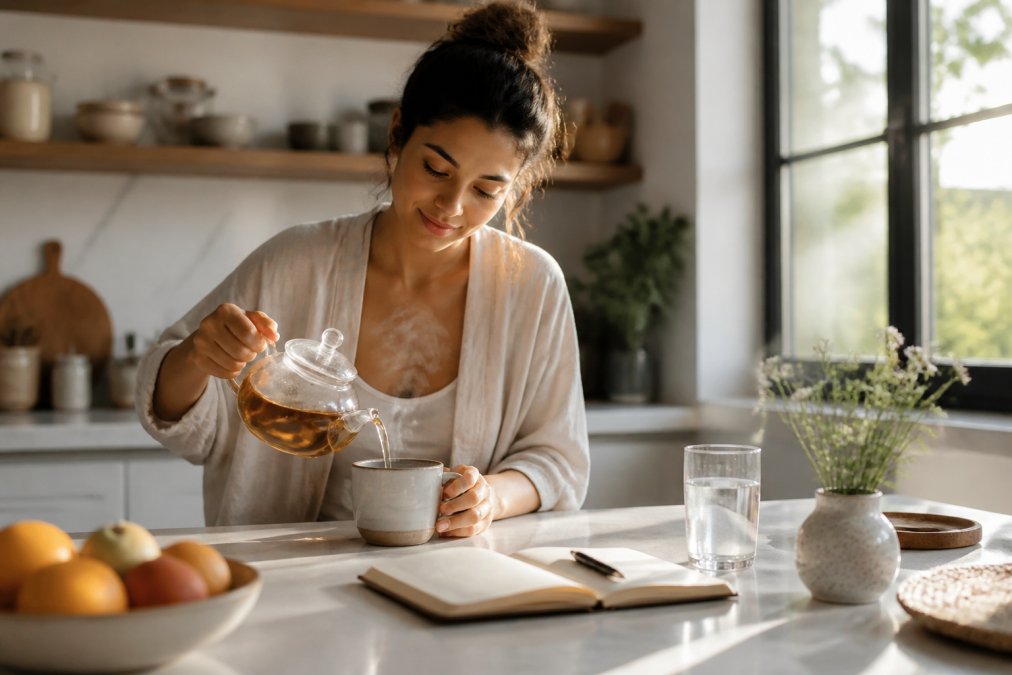
Hydration matters more than most people expect. Aim for a full glass of water within thirty minutes of waking, then keep sipping through the morning. Bloating relief often improves from consistent fluid intake alone, not any single food change.
Intention setting takes sixty seconds. Write one sentence about how you want to feel today, not what you want to accomplish. On high-energy days that might read “steady and focused.” On day two of your period, “gentle with myself” is a legitimate entry.
Pair your warm beverage with your supplement at the same time each morning. Habit stacking, attaching a new behavior to an existing one, is the most reliable way to make a daily ritual stick past week two.
Natural Ways to Reduce Period Cramps Through Movement and Pelvic Warmth
Natural ways to reduce period cramps come down to two mechanisms: increasing blood flow to the pelvic region and reducing muscle tension. Movement and warmth do both, but timing and dose matter more than most guides admit.
Why Cramps Happen in the First Place
Cramps are caused by prostaglandins, hormone-like compounds that make the uterus contract to shed its lining. Higher levels mean stronger, longer contractions, which is why cramps peak on day one or two, and why anti-inflammatories like ibuprofen work: they blunt prostaglandin production. Heat and movement do not block prostaglandins, but they reduce the downstream effect, less tension, better circulation, and a nervous system that is not bracing against pain.
Movement: The Right Dose, Not Just “Gentle”
Low-intensity exercise works better than rest for most people, but “gentle” is not useful on its own. A practical framework:
- Days 1-2 (heaviest cramping): 15-20 minutes of walking, restorative yoga, or slow stretching. Keep your heart rate conversational. The goal is circulation, not fitness.
- Days 3-5: Add light resistance or a longer walk if you feel up to it. Many people find their energy returns faster when they move a little on the worst days rather than staying in bed.
- Follicular and ovulatory phases: This is your window for higher-intensity training. Strength work, running, and interval training are better tolerated here, and the habit you build now carries into the luteal phase.
- Luteal phase: Drop back to moderate intensity. If you track your cycle, you will likely notice a two- to three-day window each month when hard workouts feel disproportionately difficult, that is normal, not a fitness failure.
What to avoid: heavy lifting, sprint work, and high-impact classes during the first two days. These spike cramping rather than relieve it, increasing intra-abdominal pressure on a body that is already contracting.
Warmth: Apply It Before the Pain Peaks
The most underused piece of cramp advice is timing: heat works best applied before cramps reach their worst, not after. If your cramps typically start mid-morning on day one, apply a heating pad or take a warm shower the night before and again first thing in the morning.
Options, roughly in order of convenience:
- Heating pad or adhesive heat patch: 15-20 minutes at a time, several times a day. Adhesive patches are the practical choice for work or school.
- Hot water bottle: Cheap, effective, and easy to position against the lower abdomen or lower back.
- Warm bath or shower: Useful for whole-body relaxation as well as local heat. Add Epsom salts if you like them, but the heat is doing the work.
- Warm beverages: A hot drink will not reach your uterus, but the warmth and the ritual of drinking it calm the nervous system, which reduces the tension that makes cramps feel worse.
The Budget-Friendly Version
You do not need a $200 device. A $15 hot water bottle, a towel warmed in the dryer, or a long hot shower covers the same mechanism. The most effective cramp ritual is the one you will actually repeat, and the cheapest version is usually easiest to repeat.
Cramp relief is a timing problem as much as a technique problem. Apply warmth and gentle movement before your cramps typically peak, not after they have already set in. Two cycles of tracking your cramp onset time will tell you exactly when to start.
If cramps are severe enough to interfere with work, school, or sleep for more than a day or two each cycle, or if they are getting worse over time, that is a conversation for a healthcare provider, not something to manage with heat and walking alone. Severe menstrual pain can have treatable underlying causes.
Herbal Supplements for Period Wellness: What to Look For
Herbal supplements for period wellness vary enormously in quality, and the label rarely tells you what you need to know. Three things separate a useful product from an expensive placebo: ingredient transparency, third-party testing, and a formula built for daily rather than acute use.
Start with the ingredient list. A useful label names every herb and its amount in milligrams. A “proprietary blend” that lists ingredients without dosages gives you no way to compare products or judge whether the amount is meaningful. If the manufacturer will not disclose the dose, assume it is low.
Then check testing. Third-party verification, from labs independent of the manufacturer, confirms that what is on the label is in the bottle and that the product is free of heavy metals, mold, and undeclared fillers. Botanical powders are agricultural products, and contamination is a real risk when sourcing is uncontrolled.
Finally, ask whether the formula is designed for daily use or only for your period week. Daily formulas support the whole cycle; acute formulas target the worst three days. Both have a place, but they are not interchangeable, and the label should say which one you are buying.
Herbs Commonly Used for Cycle Support
A handful of botanicals show up repeatedly in cycle-focused formulas. Knowing what each is traditionally used for helps you read a label critically:
- Chasteberry (Vitex agnus-castus): Traditionally used to support hormonal balance across the luteal phase. Effects are cumulative, which is why it appears in daily formulas rather than acute ones.
- Ginger: Studied for its effect on nausea and cramping. A common traditional dose is around 1 gram of powdered root, often taken at the first sign of cramps (pubmed.ncbi.nlm.nih.gov).
- Cinnamon: Frequently included for cramp and flow support. Most traditional preparations use 1-3 grams per day.
- Magnesium (not an herb, but ubiquitous in these formulas): Supports muscle relaxation and sleep quality. Common supplemental doses range from 200-400 mg per day, with magnesium glycinate and citrate being the better-absorbed forms.
- Vitamin B6: Often paired with magnesium for luteal-phase mood and comfort support.
None of these substitutes for medical care, and none works instantly. The herbs with the best evidence for cycle support are taken consistently over two to three cycles, not the day cramps start.
Reading the Label: A Quick Checklist
- Every herb listed with a milligram amount, not hidden in a blend
- Third-party test results available on request or published online
- Clear daily-use or acute-use positioning
- No unlisted stimulants, diuretics, or “detox” ingredients
- A serving size you will actually take every day
This is where cycle 180 fits. Our all-natural powdered dietary supplement blends herbs, vitamins, and minerals into a single daily drink, designed to support menstrual wellness, comfort, and overall well-being across the monthly cycle rather than just during your period.
If you take hormonal birth control or any prescription medication, talk to your healthcare provider before adding an herbal supplement. Some herbs interact with how the body processes medication, and this is not something to guess at. Chasteberry in particular is often flagged for people on hormonal contraception or fertility treatment. Bring the actual bottle to your appointment so your provider can read the ingredient list with you.
Start one new supplement at a time and give it a full two cycles before judging it. Stacking three new products in the same week makes it impossible to tell which one helped, or which one caused the side effect.
Evening Rituals: Sleep Hygiene, Breathwork, and Digital Detox
Evening rituals determine how well you recover, and recovery makes the next day’s symptoms manageable. Sleep hygiene comes first: consistent bedtime, dark room, no screens for the last thirty minutes.
Breathwork is the fastest lever you have for stress reduction. Try inhaling for four counts, holding for four, exhaling for six. Five minutes before bed lowers the arousal that keeps people staring at the ceiling during the luteal phase, when sleep often worsens.
Digital detox is the piece most guides skip. Scrolling keeps your nervous system in a low-grade alert state, which works against the wind-down your body needs. Set a cutoff time and put the phone in another room.
- Fixed bedtime, within a 30-minute window
- Four-six breath pattern for five minutes
- Screens off 30 minutes before bed
- Room cool, dark, and quiet
Tracking Your Rituals: Data-Driven Adjustments for Symptom Management
Tracking turns a ritual into a system. Without data, you are guessing about what works. With two or three cycles of notes, patterns become obvious.
Track four things daily: energy (1-5), cramp intensity (1-5), sleep quality (1-5), and whether you completed your ritual. That is it. More fields means you will stop filling it in.
After two cycles, look for correlations. Many people find their worst cramp days follow their worst sleep nights; others notice skipped morning hydration predicts bloating. These links are personal, and no generic guide can predict them for you.
| What to Track | How Often | What It Reveals |
|---|---|---|
| Energy level (1-5) | Daily | Phase-based energy patterns |
| Cramp intensity (1-5) | Daily | Whether rituals reduce severity |
| Sleep quality (1-5) | Daily | Link between rest and symptoms |
| Ritual completion | Daily | Consistency and its effect on outcomes |
CDC guidance on sleep and chronic health supports the broader point that consistent sleep timing affects far more than how tired you feel.
Use a paper notebook if app notifications feel like pressure. The goal is data, not a perfect streak. Missing a day tells you something useful too.
Conclusion: Building a Sustainable Daily Ritual for Menstrual Wellness
The hardest part of any daily ritual is not knowing what to do. It is keeping it going past the first month, especially when symptoms ease and the motivation fades with them.
Build the ritual around habits you already have: attach your warm beverage to your morning routine, your breathwork to brushing your teeth at night, your tracking to getting into bed. Small anchors beat willpower every time.
Frequently Asked Questions
What are some good rituals to do during your period?
During your period, focus on comfort and restoration. Start your day with a warm beverage like ginger tea and set a gentle intention. Use pelvic warmth from a heating pad or warm compress to ease cramps. Try gentle stretching or a short walk for low-intensity movement. In the evening, practice breathwork to reduce stress and prioritize sleep hygiene with a consistent bedtime. These rituals support menstrual wellness by reducing symptom severity and promoting relaxation.
How can I support my body during different phases of my menstrual cycle?
Cycle syncing for beginners means matching your daily rituals to each phase. During menstruation, prioritize rest, hydration, and iron-rich foods. In the follicular phase, increase movement and creative work. Around ovulation, focus on social connection and high-intensity exercise. During the luteal phase, choose gentle stretching, complex carbohydrates, and stress reduction. This approach helps maintain hormonal balance and reduces PMS symptoms.
What should I look for in herbal supplements for period wellness?
Look for supplements with ingredients like chasteberry, ginger, and magnesium. Check for third-party testing to ensure quality and purity. A powdered supplement that mixes into a drink can be easier to incorporate into a daily ritual than multiple pills. Always consult your healthcare provider before starting any new supplement, especially if you take medication or have underlying conditions.
How does nutrition impact menstrual cycle comfort?
Nutrition plays a direct role in menstrual comfort. Hydration reduces bloating, while warm beverages can ease cramps. Foods rich in omega-3s, magnesium, and B vitamins support hormonal balance and reduce inflammation. Limiting caffeine, alcohol, and high-sodium processed foods may lessen PMS symptoms. A daily ritual that includes balanced meals and targeted supplements can improve overall menstrual wellness and symptom management.
If you want a simpler starting point, cycle 180 was built for exactly this. Our all-natural powdered supplement combines herbs, vitamins, and minerals in one daily drink, so your morning ritual covers your nutritional base without a shelf full of separate bottles. It is designed for daily use across your whole cycle, not just the difficult week. Get started with cycle 180 and give your daily ritual a foundation that supports you all month.