
Table of Contents
- Understanding Perimenopause Night Sweats and Vasomotor Symptoms
- Step 1: Identify and Eliminate Foods That Trigger Hot Flashes and Night Sweats
- Step 2: Optimize Your Sleep Environment and How to Cool Down Bedroom for Night Sweats
- Step 3: Choose the Best Supplements for Perimenopause Night Sweats
- Step 4: Regulate Body Temperature Through Clothing and Bedding Materials
- Step 5: Manage Stress and Practice Sleep Hygiene Techniques
- Step 6: Incorporate Physical Activity and Weight Management Into Your Routine
- Step 7: Track Your Symptoms and Adjust Your Approach
- Frequently Asked Questions
Last Updated: September 19, 2026
Understanding Perimenopause Night Sweats and Vasomotor Symptoms
Perimenopause night sweats naturally are one of the most disruptive symptoms women face during the transition to menopause. These episodes happen when your body’s temperature regulation system misfires due to fluctuating estrogen levels. Your core temperature spikes suddenly, triggering profuse sweating that can drench bedding and interrupt sleep for hours.
Night sweats are a vasomotor symptom caused by hormonal fluctuations that disrupt your brain’s temperature control. Unlike regular perspiration, they arrive without warning and repeat multiple times per night, degrading both physical recovery and mental resilience.
Their unpredictability, solid sleep one night, multiple wake-ups the next, makes a structured, multi-angle approach more effective than any single strategy.
You don’t have to accept disrupted sleep. Below are seven concrete steps to reduce perimenopause night sweats naturally.
Step 1: Identify and Eliminate Foods That Trigger Hot Flashes and Night Sweats
Your diet directly influences night sweat frequency and intensity. Certain foods and drinks trigger vasomotor responses.
Common dietary triggers to eliminate or reduce:
- Caffeine, Found in coffee, tea, chocolate, and energy drinks. It stimulates your nervous system and raises body temperature. Cut back gradually to avoid headaches.
- Alcohol, Dilates blood vessels and impairs temperature regulation. Even one glass of wine at dinner can trigger night sweats hours later.
- Spicy foods, Capsaicin in hot peppers literally raises core temperature. Avoid them especially in the evening.
- High-sugar foods, Cause rapid blood sugar spikes that stress your endocrine system and worsen hormonal fluctuations.
- Large meals close to bedtime, Digestion generates heat. Eat your largest meal at lunch, not dinner.
Keep a symptom log for two weeks, noting food, drinks, and sweat episodes. Most women see improvement within one week by eliminating caffeine after 2 p.m. and alcohol entirely.
Switch to decaf coffee, herbal teas, and cooler evening meals for measurable sleep improvement.
Step 2: Optimize Your Sleep Environment and How to Cool Down Bedroom for Night Sweats
A cool bedroom is your first line of defense against perimenopause night sweats, but shared beds require negotiation.
Target bedroom temperature: 60-67°F. Too warm amplifies night sweats; too cold disrupts sleep.
Practical cooling strategies:
- Use a programmable thermostat to drop temperature 3-5 degrees at bedtime
- Run a dehumidifier; humidity traps body heat
- Open windows when outdoor temperature permits
- Use a fan for air circulation
- Install blackout curtains
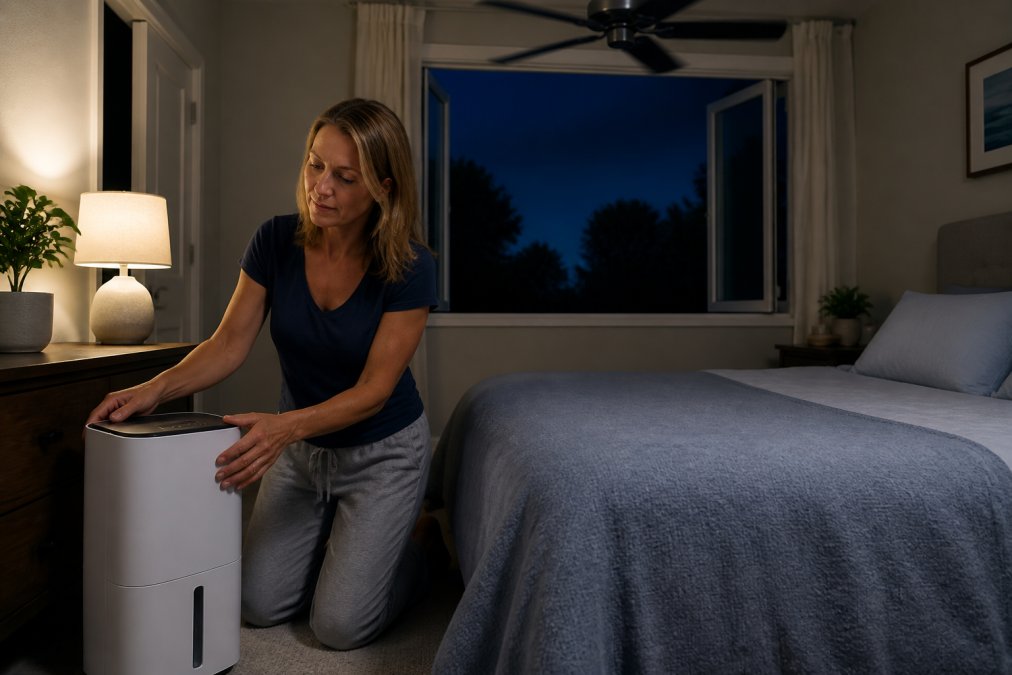
Bedding matters. Cotton, bamboo, or linen absorb moisture and allow air circulation. Avoid polyester and flannel. Consider a cooling mattress pad or gel-infused pillow.
Managing temperature when you share a bed:
If your partner prefers warmth, whole-room cooling creates conflict. The solution is zoned cooling:
- Dual-zone cooling mattress pad. Set your side to 55-60°F while your partner’s stays at 68-70°F. This is the most effective solution for shared beds.
- Separate blankets. Use lightweight on your side, heavier on theirs.
- Moisture-wicking sheets on your side. Bamboo or linen on your half, standard cotton on theirs.
- Personal cooling device. A clip-on fan, cooling pillow, or gel topper on your side only.
- Positioning. Sleep near the window or fan for cooler air access.
The conversation to have with your partner:
Frame this as a joint problem: “Night sweats are disrupting my sleep. I need to cool my side of the bed. Let’s find a solution that works for both of us.” Most partners accept dual-zone pads or separate blankets once they understand it’s about your body’s perimenopause needs, not their warmth preference.
Product-specific guidance:
- Dual-zone mattress pads ($300-$800): Gold standard for shared beds, eliminate temperature negotiation.
- Cooling pillows ($80-$200): Gel or water-based cores stay cool without electricity.
- Moisture-wicking sheets ($60-$150): Bamboo or linen prevent the “stuck in damp sheets” feeling.
- Cooling mattress toppers ($150-$400): Alternative if you don’t want to replace your mattress.
Optimizing your sleep environment alone often cuts night sweat frequency in half. For shared beds, solving the temperature conflict first makes all other cooling strategies more effective.
Step 3: Choose the Best Supplements for Perimenopause Night Sweats
Natural supplements can support hormonal balance. Choose ones with a track record and combine them strategically.
Helpful supplements:
- Vitamin E: Supports hormonal balance
- Evening primrose oil: May help with vasomotor symptoms
- Black cohosh: Traditional menopause remedy
- Magnesium: Promotes relaxation and sleep quality
A comprehensive approach combines multiple support mechanisms. cycle 180’s powdered supplement blend includes herbs, vitamins, and minerals designed to support menstrual wellness, comfort, and overall well being throughout the monthly cycle, addressing multiple needs in one daily dose rather than juggling separate pills.
Look for third-party testing and transparent sourcing. Start with one supplement at a time to identify what helps you.
Step 4: Regulate Body Temperature Through Clothing and Bedding Materials
What you wear to bed matters as much as room temperature. The right fabrics prevent heat buildup and allow sweat to evaporate.
Best materials:
- Natural fibers: Cotton, bamboo, linen, silk breathe and wick moisture
- Moisture-wicking synthetics: Merino wool and performance fabrics pull sweat away
- Avoid: Polyester, fleece, heavy blends
Practical layering:
Wear lightweight, breathable pajamas you can remove quickly. Some prefer a base layer with a robe; others sleep in underwear and a moisture-wicking tank. Experiment to adjust without fully waking.
Gel-infused or buckwheat pillows stay cooler than standard pillows and often improve sleep continuity.
Keep spare moisture-wicking sheets within arm’s reach so you can change them without fully waking.
Step 5: Manage Stress and Practice Sleep Hygiene Techniques
Stress amplifies hormonal fluctuations and intensifies night sweats. Perimenopause creates a self-reinforcing cycle: night sweats fragment sleep, fragmentation triggers anxiety about the next episode, and anxiety primes your nervous system to react more intensely to vasomotor triggers. Breaking this loop requires understanding and targeting the mechanism directly.
The perimenopause anxiety-sleep cycle:
Drenching night sweats trigger a stress response, adrenaline rises, heart rate increases, you fully wake. Multiple episodes per week cause your brain to associate bedtime with threat. You go to bed tense, anticipating the next episode.
Nervous system regulation techniques (before bed):
- Box breathing: Inhale 4 counts, hold 4, exhale 4, hold 4. Repeat 5 minutes nightly to activate parasympathetic mode.
- Progressive muscle relaxation: Tense each muscle group 5 seconds, release. Start with toes, move upward. Do nightly.
- Yoga Nidra or body scan: 10-15 minutes before bed to deactivate threat-detection and lower cortisol.
- Journaling worry: Write specific worries and one practical solution for each. This moves anxiety into problem-solving.
Cognitive reframing during a night sweat episode:
Sleep hygiene habits that specifically support perimenopause:
- Go to bed and wake at the same time every day, even weekends. Consistency trains your circadian rhythm and reduces the variability that makes night sweats feel unpredictable.
- Avoid screens one hour before bed. Blue light suppresses melatonin, which is already lower during perimenopause. This matters more now than at other life stages.
- Keep your bedroom dark and quiet. Even small light sources can trigger wakefulness when you’re already in a heightened state of vigilance.
- Don’t use your bed for work, worry, or scrolling. Your brain needs to associate your bed with sleep only, not with stress or stimulation.
- Avoid napping during the day. Naps fragment nighttime sleep and make night sweats feel more disruptive because you’re already sleep-deprived.
- Limit fluids one hour before bed, but stay hydrated during the day. Night sweats dehydrate you, but drinking water right before bed increases bathroom trips that further fragment sleep.
The timeline for nervous system reset:
Step 6: Incorporate Physical Activity and Weight Management Into Your Routine
Regular physical activity stabilizes hormonal fluctuations and improves sleep quality. Exercise doesn’t have to be intense, consistency matters more than intensity.
Effective types of activity:
- Walking, 30 minutes daily is enough to regulate hormones and improve sleep
- Strength training, Builds muscle, which improves metabolic stability
- Swimming or water aerobics, Low-impact cardio that doesn’t generate excess body heat
- Cycling, Steady-state cardio without the heat stress of running
Step 7: Track Your Symptoms and Adjust Your Approach
Symptom tracking reveals patterns you can’t see otherwise. When you know what triggers your night sweats, you can adjust your strategy with precision.
What to track:
- Date and time of night sweats
- Severity (mild dampness vs. drenching sweat)
- What you ate and drank that day
- Your stress level and sleep quality
- Physical activity and timing
- Supplements taken
- Room temperature and bedding used
Frequently Asked Questions
What vitamins or minerals help reduce perimenopause night sweats?
Vitamin E, magnesium, and vitamin B6 are commonly studied for managing vasomotor symptoms during perimenopause. Evening primrose oil and black cohosh have been used in natural approaches to support hormonal balance. While research is ongoing, many women find relief by addressing nutritional gaps that can worsen night sweats. A healthcare provider can recommend appropriate dosages based on your individual needs and any medications you’re taking.
Can dietary changes really help stop perimenopause night sweats?
Yes. Certain foods and beverages trigger hot flashes and night sweats by raising body temperature or affecting hormonal fluctuations. Caffeine, alcohol, spicy foods, and high-sugar items are common culprits. Keeping a food diary helps identify your personal triggers. Eating cooling foods like fruits, vegetables, and whole grains, plus staying hydrated, supports thermal comfort and may reduce symptom severity over time.
At what stage of perimenopause do night sweats typically begin?
Night sweats often start during the early to middle stages of perimenopause, when hormonal fluctuations are most pronounced. Estrogen levels become unpredictable, triggering vasomotor symptoms like hot flashes and sleep disruption. Some women experience them throughout perimenopause, while others find relief as they transition through the stages. Symptom tracking helps you understand your personal pattern and when interventions are most needed.
Should I use natural remedies instead of consulting a doctor about night sweats?
Natural approaches and lifestyle modifications are valuable first steps, but they work best alongside professional guidance. Consult a doctor if night sweats severely disrupt sleep, occur suddenly without perimenopause context, last longer than a few months, or if you’re unsure whether they’re hormonal or related to another condition. A healthcare provider can rule out other causes and help you decide whether non-hormonal relief strategies or other options suit your situation.