
Table of Contents
- How Long Do Hormone Supplements Take to Work
- What Changes to Expect: Sleep, Mood, Energy, and Skin
- How to Track Menstrual Cycle Symptoms
- Best Time to Take Hormone Supplements
- Factors That Change Your Results Timeline
- Supplement Safety and Medication Interactions
- What Realistic Expectations Look Like
- Frequently Asked Questions
Last Updated: October 8, 2026
How Long Do Hormone Supplements Take to Work
Hormone supplements work on different timelines depending on what you’re taking and how your body responds. Most women notice some changes within two to three weeks, but visible, meaningful shifts typically take one to four months of consistent daily use.
The key word here is consistency. Hormone balance doesn’t happen overnight. Your body needs steady levels of the herbs, vitamins, and minerals in your supplement to begin shifting how you feel. Missing doses or skipping days resets your progress.
The timeline question comes up constantly. The frustration is real: you want relief now, but your body operates on its own schedule. Let’s break down what actually happens in your system and when you’re likely to feel it.
The First Two to Three Weeks
The first two to three weeks are your body’s adjustment phase.
During this window, you might notice small shifts. Some women report better sleep as early as week one or two. Others feel a subtle lift in mood or slightly more stable energy.
What’s happening chemically is that your body is absorbing and processing these compounds. Herbs like vitex and magnesium start accumulating in your system. Vitamin D begins supporting your baseline hormone production.
The most common mistake here is expecting dramatic results by week two and then deciding the supplement isn’t working. It’s too early. Your body needs more time to establish new patterns.
One to Four Months for Visible Changes
This is where real changes show up. By one month of consistent use, many women report noticeable improvements in sleep quality, mood stability, and energy levels.
Why this timeline? Your menstrual cycle itself is roughly 28 days. Meaningful hormone shifts take at least two to three complete cycles to become obvious.
This is also when you’ll see whether the supplement is actually working for your specific situation. Some women see dramatic improvement by month two. Others need the full four months to feel confident in the results.
The realistic expectation: by month four, you should know whether this supplement is delivering the changes you hoped for.
What Changes to Expect: Sleep, Mood, Energy, and Skin
Hormone supplements don’t work like pain relievers. You won’t feel a sudden shift within 30 minutes. Instead, you notice gradual improvements across multiple areas of your life. The changes tend to follow a pattern, though timing varies.
Sleep Quality and Mood Shifts
Sleep is often the first thing to improve. Many women report falling asleep more easily within the first two to three weeks, even before other symptoms shift. This happens because magnesium and certain herbs like passionflower directly support sleep architecture.
Better sleep then cascades into better mood. When you sleep better, your nervous system regulates more effectively. Mood swings tend to smooth out over weeks two through six.
This is one of the most noticeable early wins. You might not feel dramatically different, but you’ll notice you’re sleeping through the night or waking up fewer times. Your partner might comment that you seem calmer. These aren’t placebo, they’re measurable shifts in your physiology.
Energy, Strength, and Stamina
Stable energy takes slightly longer to establish, typically showing up between weeks three and eight. As your hormone levels settle and sleep improves, you have more consistent energy throughout your day. The afternoon crashes become less severe. Your stamina in workouts or daily activities gradually improves.
Strength gains are subtle and take longer. By month two or three, you might notice you recover faster from exercise or feel less fatigued during intense activity. This ties to improved hormone balance supporting muscle recovery and oxygen use.
The pattern most women report: weeks one through three show sleep and mood improvement. Weeks four through eight bring energy stabilization. Months two through four show visible physical changes and sustained stamina improvements.
How to Track Menstrual Cycle Symptoms
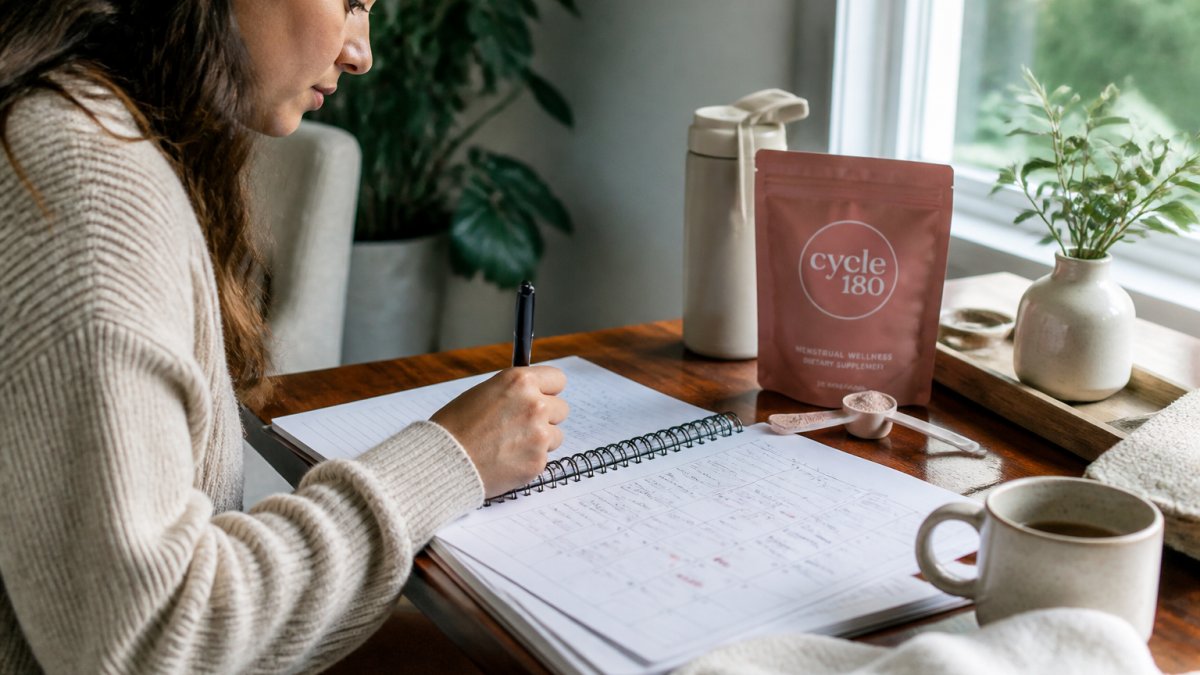
The only way to know whether hormone supplements are actually working is to track what’s changing. Without documentation, you rely on memory and feeling, which are notoriously unreliable.
What to Document Each Day
Track these four things daily:
- Cramping severity: Rate it 0-10, where 0 is no pain and 10 is unbearable
- Mood: Note if you’re stable, irritable, anxious, or depressed
- Energy level: Rate 1-10, with 10 being energized and 1 being exhausted
- Sleep quality: Note hours slept and whether you woke frequently
Do this every single day for at least 90 days. Use a simple calendar, a notes app, or a period-tracking app, whatever you’ll actually stick with.
Why 90 days? Three months gives you three complete menstrual cycles. You’ll see patterns emerge. You’ll notice whether your worst symptoms happen on the same days of your cycle each month. You’ll see whether that pattern is shifting.
This data is also critical if you eventually talk with a healthcare professional. Instead of saying “I think my cramps are better,” you can show them the before-and-after numbers. That’s the difference between a vague impression and real evidence.
Using At-Home Tests to Monitor Hormone Levels
At-home hormone tests measure hormone levels in saliva or blood spot samples. They’re more objective than symptom tracking, but they’re also more expensive and less frequent.
If you’re curious about your actual hormone levels, at-home tests for estrogen, progesterone, and luteinizing hormone are available.
The limitation: a single test result is just one data point. Meaningful comparison requires testing before you start the supplement, then again after two to three months. That’s a bigger investment, but it gives you concrete numbers.
Most women find that symptom tracking is enough. The at-home tests are useful if you want objective confirmation or if you’re working with a healthcare provider who wants to see actual hormone numbers.
Best Time to Take Hormone Supplements
Timing matters less than consistency, but there are some best practices.
Daily Consistency and Steady Levels
Hormone supplements work best when you take them at the same time every day. Your body builds up a steady level of the active compounds when intake is consistent.
The specific time of day matters less than you’d think. Morning, afternoon, or evening all work, what matters is that you do it every single day without skipping.
If you’re taking a powdered supplement like cycle 180, mixing it into a morning smoothie or evening drink creates a habit loop. You’re less likely to forget when it’s tied to something you already do daily.
Skipping doses disrupts the steady accumulation your body needs. Missing three days a week means you’re never building up to effective hormone-supporting levels.
Factors That Change Your Results Timeline
Not everyone follows the same timeline. Several factors speed up or slow down how quickly you notice changes.
Individual Response and Hormone Balance
Your starting point matters significantly. If your hormone levels are severely imbalanced, it takes longer to shift them. If you’re dealing with mild symptoms, you might see improvement faster.
Your age and cycle regularity also affect the timeline. Women with regular cycles typically see changes faster than those with irregular cycles, because their hormonal patterns are more predictable.
Stress levels impact how quickly supplements work. High chronic stress suppresses the very hormones you’re trying to support. If you’re managing significant stress, you might need a longer timeline or additional support beyond the supplement alone.
Dose, Consistency, and Supplement Quality
The dose you’re taking matters. Higher doses of active ingredients typically show results faster, but they also carry higher risk of side effects. Following the recommended dose is the balanced approach.
Consistency is non-negotiable. Taking your supplement five days a week instead of seven means you’re getting roughly 70% of the benefit. Expecting full results while skipping doses is unrealistic.
Supplement quality directly affects how quickly you see results. Supplements with third-party testing and verified ingredient potency work faster than lower-quality alternatives. Cheaper supplements sometimes contain lower concentrations of active herbs or expired ingredients, which explains why some women try three brands before finding one that works.
Supplement Safety and Medication Interactions
Hormone supplements are generally safe, but they’re not risk-free. Understanding potential interactions is important before you start.
Herbs, Vitamins, and Birth Control
If you’re taking hormonal birth control, certain herbs in hormone supplements can interact with it. Vitex, for example, may reduce birth control effectiveness in some cases. This doesn’t mean you can’t take both, but it means you should know about the potential interaction.
Similarly, if you’re taking other medications for thyroid function, mood, or other conditions, some herbs can interfere. Magnesium supplements can reduce the absorption of certain medications if taken at the same time.
The safest approach: tell your healthcare provider what’s in your supplement before you start taking it. They can assess whether interactions are likely based on your specific medications and health history.
When to Talk with a Healthcare Professional
Talk with a healthcare professional before starting hormone supplements if you:
- Are pregnant or breastfeeding
- Have a history of hormone-sensitive cancer
- Take prescription medications for mood, thyroid, or heart health
- Have severe dysmenorrhea that hasn’t been evaluated by a doctor
- Are trying to conceive and have been unsuccessful for more than a year
These situations warrant professional guidance. A healthcare provider can help you determine whether a supplement is appropriate for your situation or whether other approaches would be better.
Also seek professional advice if you start a supplement and experience unexpected side effects, severe headaches, mood changes, or unusual bleeding patterns. These warrant a conversation with your doctor.
What Realistic Expectations Look Like
Here’s what success actually looks like with hormone supplements: not zero cramping, but manageable cramping. Not perfect mood, but mood swings that are less extreme.
Hormone supplements support your body’s natural processes. They don’t override your physiology or solve problems that require medical treatment.
The realistic timeline: two to three weeks to notice early shifts in sleep and mood.
If you’re not seeing improvement by month four, the supplement might not be the right fit for your body, or your dose might need adjustment. This isn’t failure, it’s data.
Hormone supplements work best when you approach them with clear expectations and consistent daily use.
Frequently Asked Questions
How long should I try a hormone supplement before deciding whether it helps?
Most herbal and mineral hormone supplements require at least 2 to 3 months of consistent daily use before you notice meaningful changes in symptoms like sleep quality, mood, or energy. Some women see subtle shifts within 2 to 3 weeks, but stabilized hormone levels and visible effects typically take 1 to 4 months. Track your symptoms weekly to spot trends. If you see no improvement after 3 months of daily use at the recommended dose, consult a healthcare provider to rule out other causes.
What is the best time of day to take hormone supplements?
Consistency matters more than timing. Take your hormone supplement at the same time each day to maintain steady hormone levels in your bloodstream. Many women find morning with breakfast easier to remember, while others prefer evening. If the supplement contains stimulating herbs, avoid taking it late in the day. Check the product label for specific guidance, and prioritize picking a time you’ll remember daily over optimizing for a particular hour.
Can herbal supplements affect your menstrual cycle?
Herbal hormone supplements are designed to support hormonal balance and may affect cycle regularity, flow, or symptom severity. Some women experience lighter periods or more regular cycles; others notice changes in cycle length. These shifts can take 1 to 3 months to stabilize as your hormone levels adjust. If you experience severe changes in bleeding, missed periods, or unexpected spotting, stop use and contact your healthcare provider to rule out other causes.
How do I know if a hormone supplement is actually working?
Track measurable changes: fewer cramps or lighter pain during your period, improved sleep quality, more stable mood between cycles, sustained energy without afternoon crashes, or clearer skin. Document these daily in a journal or app. Blood tests or at-home hormone tests can show whether blood levels have shifted, though this requires baseline testing before you start. Realistic progress shows gradually, subtle improvements in week 2 to 3, more noticeable changes by month 2 to 3. If you see no shift after 3 months of consistent use, the supplement may not be right for you.