
Table of Contents
- How to Balance Hormones Naturally for Period Health: Start With a Plan
- Step 1: Build a Hormone-Balancing Diet for Women
- Step 2: Understand How Stress Affects the Menstrual Cycle
- Step 3: Use Exercise and Sleep to Support Hormone Regulation
- Step 4: Learn How to Regulate Your Period Naturally With Cycle Tracking
- Step 5: Know When to See a Doctor for Irregular Periods
- How to Balance Hormones Naturally: Realistic Timelines and What to Track
- Frequently Asked Questions
Last Updated: October 17, 2026
How to Balance Hormones Naturally for Period Health: Start With a Plan
If you want to balance hormones naturally for period health, the first step is understanding that hormones respond to daily habits, not quick fixes. Women often arrive looking for a single supplement that solves everything, when the real drivers are food, sleep, stress, and movement. This guide walks you through five steps you can start this week.
The good news? Small, repeatable changes tend to matter more than dramatic overhauls. Below, we’ll show you exactly how to build a plan that fits a real life.
Hormone balance is not a one-time fix. It is the result of consistent daily inputs, which means your routine matters more than any single product.
What Hormonal Balance Actually Means for Your Cycle
Hormonal balance is the healthy rise and fall of estrogen, progesterone, cortisol, insulin, and thyroid hormones across your menstrual cycle. It is not a flat line. Hormones are supposed to fluctuate.
Your cycle has phases, and each one asks something different of your body. During menstruation, energy often dips. Around ovulation, estrogen peaks. In the luteal phase, progesterone rises and some women feel more tired or irritable.
- Estrogen helps build the uterine lining in the first half of your cycle
- Progesterone supports the second half and steadier mood
- Cortisol rises with stress and can crowd out sex hormones when chronically high
- Insulin affects energy, cravings, and how your body stores fuel
- Thyroid hormones set your overall metabolic pace
When these signals get disrupted, you may notice period changes, worse PMS, or cycle regularity issues. That is your body asking for support, not a sign you failed.
Signs Your Hormones May Be Out of Balance
Watch for patterns, not one-off bad days. Occasional cramps are normal. A predictable monthly pattern of severe symptoms is worth investigating.
Common signs include:
- Irregular or missed periods
- Heavy bleeding or clots
- Acne along the jawline
- Fatigue that sleep does not fix
- Mood swings tied to your cycle
- Bloating, breast tenderness, or headaches before your period
- Cravings for sugar and refined carbs
- Trouble falling asleep or staying asleep
A common mistake is treating each symptom separately. In practice, these signs usually point to the same underlying habits: under-eating protein, poor sleep quality, chronic stress, or too little movement.
Step 1: Build a Hormone-Balancing Diet for Women
A hormone-balancing diet for women starts with three things at every meal: protein, healthy fats, and fiber. This combination steadies blood sugar, supports hormone production, and feeds your gut.
Hormones are built from nutrients. Cholesterol and healthy fats support steroid hormone synthesis. Protein supplies the amino acids your body needs to make and regulate hormones. Fiber helps your body clear used estrogen through digestion.
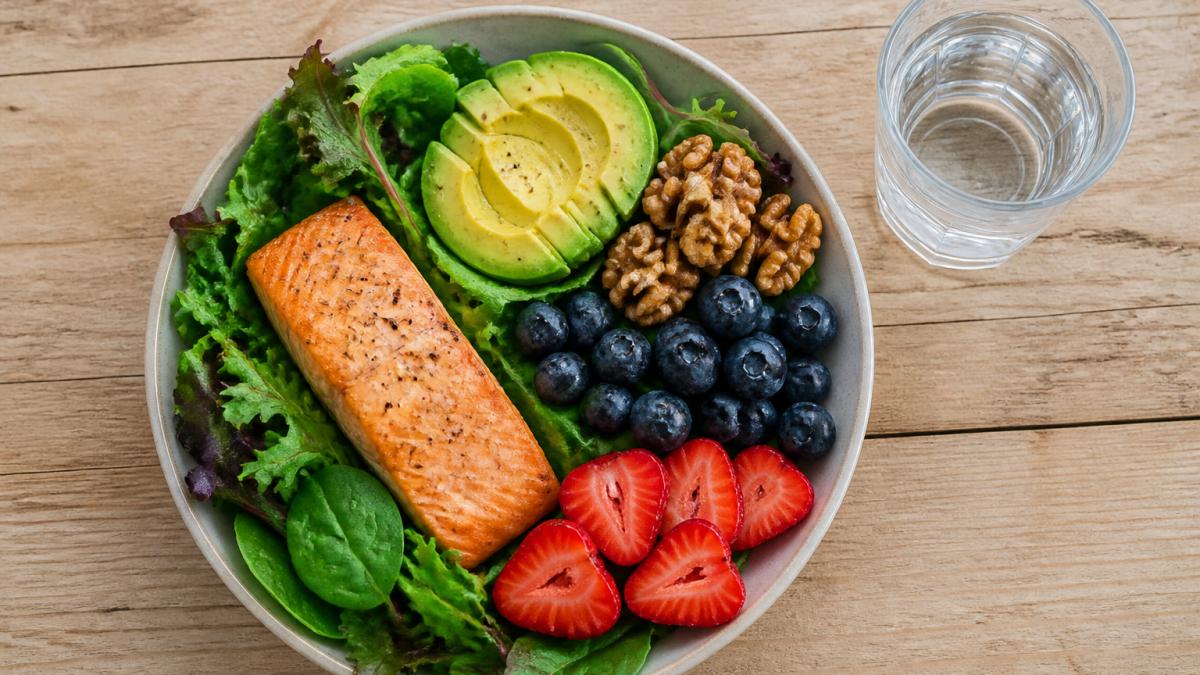
Protein, Healthy Fats, and Fiber at Every Meal
Aim for a palm-sized portion of protein at each meal. Eggs, Greek yogurt, chicken, fish, tofu, lentils, and beans all work. Add a thumb-sized portion of healthy fats like avocado, olive oil, nuts, or seeds. Then fill the rest of your plate with vegetables and a serving of whole grains or legumes.
- Protein: eggs, fish, poultry, tofu, lentils, Greek yogurt
- Healthy fats: avocado, olive oil, nuts and seeds, fatty fish rich in omega-3 fatty acids
- Fiber: whole grains, legumes, fruits and vegetables
- Antioxidants: berries, leafy greens, and other colorful produce
What most guides miss is under-fueling. Eating too little, especially during the luteal phase, can worsen cravings and fatigue. If you are constantly dieting, your body may downshift hormone production to conserve energy.
Skipping breakfast and running on coffee until noon spikes cortisol and destabilizes blood sugar. That pattern often shows up as stronger PMS and worse cravings in the second half of your cycle.
Step 2: Understand How Stress Affects the Menstrual Cycle
Chronic stress is one of the most overlooked drivers of period problems. When cortisol stays high, your body prioritizes survival over reproduction.
Cortisol also raises blood sugar, which pushes insulin up. High insulin can increase ovarian androgen production and lower sex hormone-binding globulin (SHBG), leaving more free testosterone in circulation.
Stress management is not a luxury. Deep breathing, meditation, yoga, and simple time outdoors all lower the stress response. Even five minutes of slow breathing before bed can help.
- Menstrual phase: prioritize rest and gentle movement; keep caffeine moderate and protect sleep
- Follicular phase: energy often rises, so this is a good window for strength training and social commitments
- Ovulation: estrogen peaks; some women feel most resilient, but cortisol can still spike with over-scheduling
- Luteal phase: progesterone rises and body temperature is slightly higher; prioritize slower evenings, consistent meals, and fewer late nights
A common pattern is that women under-eat and over-caffeinate during the luteal phase, which raises cortisol and worsens cravings.
- Try box breathing: inhale for four counts, hold four, exhale four, hold four
- Take a short walk after lunch without your phone
- Set a hard stop on work at a consistent time
- Practice yoga or gentle stretching two to three times a week
- Keep a consistent wake time even on weekends to stabilize the HPA axis
The most effective stress habit is the one you will actually repeat. Pick a single two-minute practice and attach it to something you already do daily, like brushing your teeth or making coffee.
If stress is paired with missed periods for three months or more, unexplained weight change, or symptoms that disrupt daily life, that is a signal to see a clinician. Lifestyle changes can support hormone health, but they cannot diagnose or treat conditions such as PCOS, thyroid disorders, or endometriosis.
Step 3: Use Exercise and Sleep to Support Hormone Regulation
Movement and rest do more for hormone regulation than most people expect. Regular exercise improves insulin sensitivity and supports metabolic health.
Under-fueling is the most common exercise mistake for period health. When energy intake is too low relative to training load, the body can downshift reproductive signaling.
A cycle-aware training approach works better than the same routine all month:
- Menstrual phase: prioritize gentle movement, walking, and mobility; strength sessions are fine if energy allows
- Follicular phase: energy often rises, so this is a good window for heavier strength training and higher-intensity intervals
- Ovulation: many women feel strongest here, but recovery and hydration still matter
- Luteal phase: body temperature is slightly higher and perceived effort can rise; favor moderate cardio, strength maintenance, and extra rest days
You do not need intense daily workouts. A mix works best:
- Strength training two to three times a week
- Moderate cardio like brisk walking or cycling
- Gentle movement on low-energy days
- Rest days built into the plan
Sleep quality is the other half. Most adults need seven to eight hours of sleep. Poor sleep raises cortisol and disrupts hormone fluctuations.
Track sleep hours and how rested you feel on a 1-to-10 scale alongside your cycle.
If you only change two things this month, make them a consistent sleep schedule and two strength sessions per week. Those two habits support nearly every other step in this guide.
Exercise and sleep habits support hormone health, but they are not a treatment for conditions such as PCOS, thyroid disorders, or endometriosis. If periods stop for three months or more without pregnancy, or if cycle changes come with unexplained weight loss or gain, see a clinician.
Step 4: Learn How to Regulate Your Period Naturally With Cycle Tracking
Learning how to regulate your period naturally starts with data. Cycle tracking shows you what is actually happening, so you stop guessing. Track the first day of bleeding, cycle length, flow, symptoms, sleep, and mood.
A simple tracking method:
| What to Track | Why It Matters | How Often |
|---|---|---|
| First day of period | Establishes cycle length | Monthly |
| Flow and clots | Flags heavy bleeding | Daily during period |
| Symptoms (cramps, mood, acne) | Reveals patterns by phase | Daily |
| Sleep hours and quality | Links rest to symptoms | Daily |
| Stress and energy levels | Connects cortisol to cycle changes | Daily |
After two to three cycles, patterns emerge. You may notice cramps cluster in the luteal phase, or that poor sleep predicts worse mood. That is when you can adjust food, movement, and rest by cycle phase instead of applying the same routine all month.
Step 5: Know When to See a Doctor for Irregular Periods
Tracking is powerful, but some signs need medical care. Knowing when to see a doctor for irregular periods protects you from missing something serious.
See a doctor if you notice:
- Periods that stop for three months or more without pregnancy
- Cycles consistently shorter than 21 days or longer than 35 days
- Bleeding so heavy you soak through protection in an hour
- Severe pain that disrupts work, school, or sleep
- Bleeding between periods or after sex
- Symptoms that suddenly get worse
These can point to conditions like thyroid problems, PCOS, or fibroids. A doctor can order blood work and imaging to check hormone levels and rule out other causes. Office on Women’s Health guidance on menstrual cycle problems is a useful starting point before your appointment.
How to Balance Hormones Naturally: Realistic Timelines and What to Track
Expect gradual change, not overnight results. Most women notice small shifts in energy and mood within the first cycle, and clearer pattern changes after two to three months of consistent habits.
What to track for measurable outcomes:
- Cycle length and regularity across three cycles
- Symptom severity scored from 1 to 10 each day
- Sleep hours and how rested you feel
- Energy levels through each phase
- Cravings and mood swings
Supplements deserve a cautious approach. Herbal blends can support nutrition and comfort, but evidence varies by ingredient. Check with your doctor before adding anything, especially if you take birth control or other medication.
This is where cycle 180 fits into a broader plan. It is one input among many, not a replacement for food, sleep, and stress care. NCCIH information on herbal supplements is a good resource for checking ingredients and safety.
Frequently Asked Questions
How long does it take to balance hormones naturally for period health?
Most people notice small changes in energy, mood, or cycle symptoms within one to three menstrual cycles of consistent diet, sleep, and stress changes. Hormone levels shift gradually, so give any new routine at least 60 to 90 days before judging results. Track your cycle and symptoms each month so you can compare objectively. If symptoms get worse or do not improve after three months, talk to a healthcare professional about testing and next steps.
Can stress really affect your menstrual cycle?
Yes. High cortisol from ongoing stress can disrupt the signals between your brain and ovaries, which may delay ovulation, lengthen or shorten your cycle, and worsen PMS. Short daily practices like deep breathing, meditation, yoga, or a 20-minute walk can lower stress load. Prioritizing seven to eight hours of sleep also helps. If your period stops for three months or more without pregnancy, see a doctor to rule out other causes.
What foods support a hormone-balancing diet for women?
Focus on protein at every meal, healthy fats like avocados, nuts, seeds, and omega-3 fatty acids from fish, plus fiber from whole grains, legumes, fruits, and vegetables. These foods support blood sugar stability, gut health, and steroid hormone synthesis. Limit highly processed foods and excess alcohol, which can worsen inflammation and hormone fluctuations. Small, consistent changes beat strict rules, especially if you have period-related symptoms.
When should you see a doctor for irregular periods?
Book an appointment if your cycles are consistently shorter than 21 days or longer than 35 days, if you bleed for more than seven days, if you skip periods for three months or more without pregnancy, or if pain stops you from working or sleeping. Also seek care for very heavy bleeding, bleeding between periods, or sudden changes after years of regular cycles. These signs can point to thyroid issues, PCOS, or other conditions that need diagnosis.
Balancing hormones takes patience, and the hardest part is staying consistent when results feel slow. That is exactly where a simple daily ritual helps. Cycle 180 offers an all-natural powdered blend of herbs, vitamins, and minerals made to support menstrual wellness and comfort throughout your cycle, so one easy step fits into the routine you are already building. Get started with cycle 180 and give your cycle the steady daily support it deserves.