
Table of Contents
- Intimate Rose vs Health & Her: Comparing Different Tools for Pelvic Health
- Quick Comparison: Intimate Rose and Health & Her
- Intimate Rose: Silicone Dilators and Wands for Pelvic Pain
- Health & Her: Natural Supplements for Cycle Comfort
- Best Vaginal Dilators for Pelvic Pain: Intimate Rose vs Other Options
- Natural Supplements for Cycle Comfort: Do They Replace Physical Therapy?
- Safety, Contraindications, and When to See a Specialist
- The Bottom Line: Choosing Based on Your Symptoms
- Frequently Asked Questions
Last Updated: September 6, 2026
Intimate Rose vs Health & Her: Comparing Different Tools for Pelvic Health
Pelvic health care often splits into two distinct camps: physical tools that address tissue tension directly, and nutritional supplements that target systemic comfort. Intimate Rose manufactures medical-grade silicone dilators and pelvic wands for conditions like vaginismus and pelvic floor hypertonicity, while Health & Her formulates natural supplements aimed at cycle comfort and menopause care. At cycle 180, we track these categories closely because most women need one, the other, or sometimes both.
The distinction matters because the treatment targets are entirely different: dilator therapy works on pelvic floor muscles and tissue itself, while supplements work systemically to support hormonal balance and overall menstrual wellness.
Quick Comparison: Intimate Rose and Health & Her
Intimate Rose and Health & Her serve fundamentally different purposes, so a direct “winner” depends entirely on your condition.
| Product Type | Primary Mechanism | Best For | Typical Use |
|---|---|---|---|
| Intimate Rose Dilators | Progressive physical stretching | Vaginismus, penetration pain | Insertion practice, graduated sizes |
| Intimate Rose Pelvic Wand | Targeted trigger point release | Pelvic floor hypertonicity, dyspareunia | Internal massage, 5-10 min sessions |
| Health & Her Supplements | Nutritional hormonal support | PMS, cycle discomfort, perimenopause | Daily oral intake |
One is not “better” than the other; they address different layers of pelvic health.
Intimate Rose: Silicone Dilators and Wands for Pelvic Pain
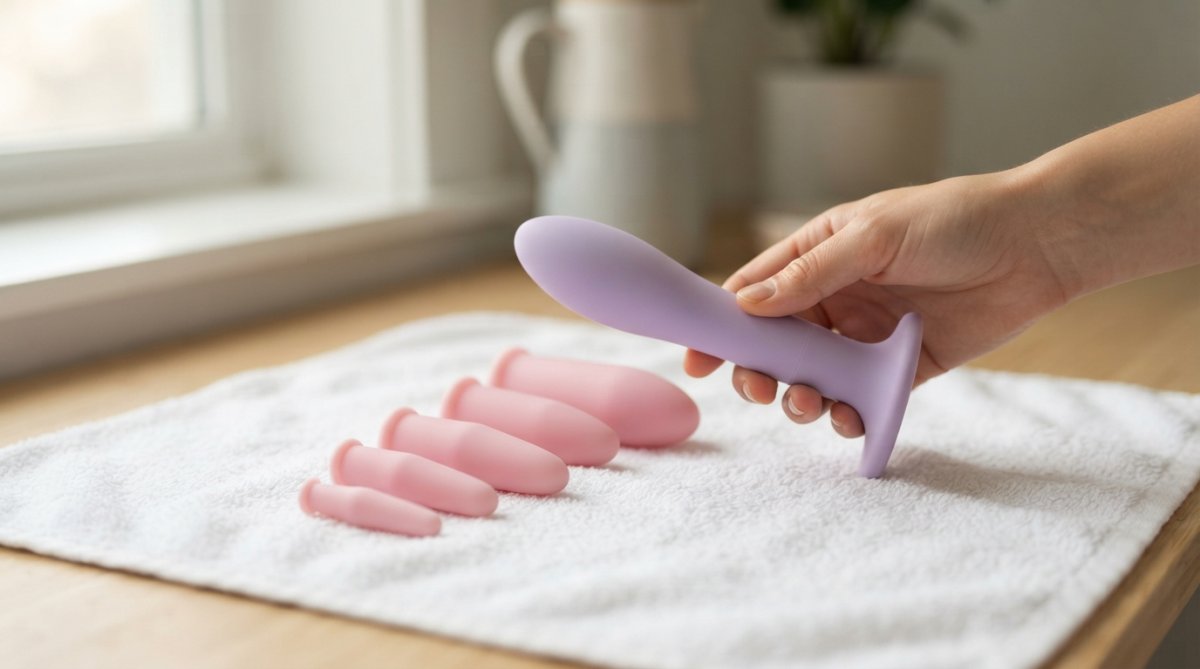
Intimate Rose is a pelvic health brand offering medical-grade silicone tools designed for vaginal dilator therapy and internal trigger point release. Their product line includes graduated dilator sets and curved pelvic wands for addressing pelvic floor dysfunction at home.
Materials, Sizing, and Insertion Comfort
Intimate Rose products use medical-grade, platinum-cured silicone, which is BPA-free, non-porous, and body-safe. This matters clinically because platinum-cured silicone does not leach byproducts and maintains its structural integrity through repeated cleaning and use.
The dilators come in graduated sets of eight, with diameters progressing from approximately 0.5 inches to 1.5 inches (peer-reviewed research). Each step increases by roughly 0.12 to 0.15 inches, a protocol aligned with the typical tissue accommodation rate recommended in pelvic floor physical therapy. The smallest sizes function as diagnostic and desensitization tools, while the larger sizes prepare tissue for standard speculum exams or intercourse.
The silicone texture is smooth but firm enough for controlled insertion, with a Shore A durometer rating typically between 20 and 30, balancing rigidity with enough flexibility to follow the natural curvature of the vaginal canal.
Insertion comfort depends heavily on curvature ergonomics. Intimate Rose wands feature a curved design that mirrors the natural angle of the vaginal canal, making self-directed use more practical. The curve is approximately 30 degrees at the neck, allowing the user to reach the levator ani and obturator internus muscles without awkward wrist positioning. Many pelvic physical therapists recommend these tools for home practice because the handle design provides adequate leverage for sustained pressure without hand fatigue.
Pelvic Floor Wand Benefits for Trigger Point Relief
A pelvic floor wand is a manual tool used to apply targeted pressure to internal trigger points. Its benefits include releasing muscle spasms associated with pelvic floor hypertonicity, improving blood flow, and retraining the muscles to relax rather than clench.
The mechanism works through sustained pressure applied to a taut band within the muscle. When pressure is held for 60 to 90 seconds, the muscle spindle fires a relaxation reflex, reducing baseline tone (PubMed). This is distinct from stretching, which elongates tissue; trigger point release resets the neurological signal that keeps the muscle contracted.
Intimate Rose wands come in two lengths, a standard version and a shorter version for users with a shallower vaginal canal or those who find the standard length difficult to maneuver. The working end features a rounded bulb for broad pressure and a smaller knob for pinpoint work on specific trigger points. The opposite end is flat and can be used externally on the perineum or obturator region.
For women with vaginismus or vestibulodynia, the wand helps desensitize tissue gradually. The protocol typically starts with external perineal pressure, then progresses to shallow internal pressure at the introitus, and finally to deeper trigger point release over several weeks. It is not a substitute for pelvic physical therapy, but it is a widely used home adjunct that extends clinical work.
Long-Term Durability and Material Degradation
Durability over 6 to 12 months of regular use is a meaningful differentiator. Platinum-cured silicone does not degrade from body oils, lubricants, or standard soap-and-water cleaning, and it resists the micro-tearing that can occur with lower-grade silicones, critical because any surface irregularity becomes a bacterial harbor.
Users who clean with isopropyl alcohol or boil their tools should note that while platinum-cured silicone tolerates both, repeated boiling can eventually soften the material. The manufacturer recommends washing with mild soap and warm water, which is sufficient given the non-porous surface. With proper care, these tools maintain their integrity well beyond the first year, making the higher upfront cost comparable to replacing cheaper tools multiple times.
Health & Her: Natural Supplements for Cycle Comfort
Health & Her offers natural supplements formulated to support hormonal balance, PMS relief, and menopause care. Their products typically combine vitamins, minerals, and herbal extracts designed to ease cycle-related discomfort from the inside out.
These supplements target systemic factors: magnesium for muscle relaxation, B vitamins for energy and mood, and chasteberry for hormonal regulation.
Best Vaginal Dilators for Pelvic Pain: Intimate Rose vs Other Options
When it comes to the best vaginal dilators for pelvic pain, Intimate Rose is frequently cited by pelvic floor therapists for its quality and educational support. However, other brands offer medical-grade silicone options at different price points.
Soul Source dilators are widely used in clinical settings and priced higher, reflecting their durability and consistent sizing for long-term rehabilitation. Bodyotics offers a more budget-conscious set that still uses medical-grade silicone, though with fewer educational resources attached. Intimina’s KegelSmart takes a different approach entirely, using sensor technology for strengthening rather than the relaxation and dilation therapy that Intimate Rose provides.
The right choice depends on whether you need progressive sizing for dilation therapy, targeted relaxation for hypertonicity, or guided strengthening exercises.
Natural Supplements for Cycle Comfort: Do They Replace Physical Therapy?
Natural supplements for cycle comfort do not replace physical therapy for structural pelvic floor issues. If your pain stems from pelvic floor muscle tension, no oral supplement will release that spasm. Supplements support the nervous system and hormonal environment, reducing symptom intensity, but they cannot physically stretch or relax contracted tissue.
A more effective strategy is layered. For example, a woman with dyspareunia related to pelvic floor dysfunction might use a dilator set for progressive dilation, attend pelvic floor physical therapy, and take a daily supplement. Each tool addresses a different layer of the problem.
Safety, Contraindications, and When to See a Specialist
Both dilators and supplements carry important safety considerations frequently understated in product comparisons. This section details when these tools are appropriate and when they can cause harm.
Absolute Contraindications for Vaginal Dilators and Wands
Do not use internal vaginal tools under any of the following circumstances:
- Active infection: Any current vaginal or urinary tract infection, including yeast infections or bacterial vaginosis. Inserting a tool during active infection can spread pathogens to surrounding tissue and worsen the condition.
- Recent pelvic surgery: Hysterectomy, prolapse repair, or cesarean delivery within the past 6 to 8 weeks. Tissue healing must be confirmed by a surgeon before any internal insertion.
- Radiation therapy to the pelvic region: Radiation causes tissue fragility and reduced vascularity. Internal manipulation without clearance from a radiation oncologist risks tissue breakdown.
- Unexplained bleeding: Any vaginal bleeding not associated with a normal menstrual period warrants evaluation before self-treatment.
- Pregnancy: Dilator therapy is not appropriate during pregnancy unless explicitly prescribed by a maternal-fetal medicine specialist.
Relative Contraindications Requiring Medical Clearance
- Endometriosis: Internal pressure on pelvic floor muscles can refer pain to endometrial lesions. A pelvic floor physical therapist can determine whether wand work is safe or whether it should be deferred until after surgical management.
- Pelvic organ prolapse: Depending on the stage of prolapse, internal tools may either help by reducing muscle tension or worsen symptoms by adding pressure to weakened supportive structures.
- Vulvodynia with allodynia: If light touch causes burning pain, the tissue may be in a central sensitization state. Starting with any internal tool can reinforce pain pathways. Desensitization work with a therapist is typically required first.
Supplement Interactions and Medication Conflicts
Health & Her supplements contain herbal extracts that can interact with prescription medications in ways that are not always obvious:
- Chasteberry (Vitex): Can alter dopamine pathways and may reduce the effectiveness of antipsychotic medications. It also has mild hormonal activity that can interfere with hormonal birth control efficacy in some formulations.
- Magnesium: At supplemental doses, magnesium can potentiate the effects of muscle relaxants, blood pressure medications, and certain antibiotics. It also competes with calcium and iron for absorption.
- St. John’s Wort (present in some cycle support blends): A well-documented CYP450 enzyme inducer that accelerates the metabolism of hormonal contraceptives, potentially reducing their effectiveness.
If you are managing a diagnosed condition like endometriosis, polycystic ovary syndrome, or pelvic inflammatory disease, consult your healthcare provider before starting any new tool or supplement regimen. The same applies if you take any daily prescription medication, as herbal interactions are under-researched and often unpredictable.
Red Flags That Warrant Immediate Specialist Evaluation
Certain symptoms should never be managed with home tools alone. Seek evaluation from a gynecologist or pelvic floor physical therapist if you experience:
- Pain that wakes you from sleep
- Pain accompanied by fever or chills
- New pain that has persisted for more than 6 weeks without improvement
- Pain with intercourse that has progressively worsened over time
- Pain associated with bowel or bladder dysfunction, including constipation, urinary urgency, or incomplete emptying
While dilators and supplements are legitimate tools, they are not diagnostic instruments. If the underlying cause is neuropathic, visceral, or inflammatory rather than muscular, these tools will not resolve the pain and may delay appropriate treatment.
Do not self-diagnose pelvic pain. Persistent pain, pain with intercourse, or pain that limits daily activity warrants an evaluation by a gynecologist or pelvic floor physical therapist before you introduce any device or supplement. This is especially important if you have never had a pelvic exam, as structural causes must be ruled out first.
Tracking Progress With a Pelvic Floor Physical Therapist
One angle most comparison articles miss is how to integrate home tool use with professional pelvic floor therapy. If you are working with a physical therapist, bring your dilator or wand to a session and ask them to observe your technique. Therapists can identify compensation patterns, such as breath-holding, abdominal bracing, or hip flexor engagement, that undermine home practice.
A structured tracking approach includes:
- Pain scale journaling: Rate pain on a 0-10 scale before and after each session, noting the specific position (e.g., left side, right side, supine with knees bent).
- Size progression log: Record which dilator size you used, how long insertion took, and whether you experienced any burning or sharp pain versus deep pressure sensation.
- Muscle tension mapping: Note which clock-face positions (e.g., 2 o’clock, 5 o’clock) feel most tender, and share this map with your therapist to guide their manual work.
Most pelvic floor therapists see faster progress when patients use tools consistently between sessions, because home practice frequency (3 to 5 times per week) exceeds what clinical visits alone can provide.
The Bottom Line: Choosing Based on Your Symptoms
If your primary issue is penetration pain, vaginismus, or a tight pelvic floor, physical tools like Intimate Rose dilators and wands are the more direct intervention, addressing tissue mechanics that supplements cannot.
If your primary issue is cyclical cramping, PMS, or perimenopausal discomfort without structural pelvic pain, a natural supplement formulated for cycle support is the more appropriate first step.
Many women find that combining approaches produces the best therapeutic outcomes. A dilator for tissue work, pelvic floor muscle training for strength and control, and a daily nutritional supplement for systemic support create a comprehensive routine. For those seeking an all-in-one nutritional foundation, cycle 180 offers a powdered blend of herbs, vitamins, and minerals designed to support menstrual wellness and comfort throughout the monthly cycle.
Frequently Asked Questions
Is Intimate Rose a reputable company?
Intimate Rose is a well-known brand in the pelvic health space, frequently recommended by pelvic floor physical therapists. Their products are made from medical-grade, BPA-free silicone and are designed for at-home use. The company provides substantial educational resources on their website. While ‘reputable’ is subjective, their focus on clinical efficacy, material safety, and patient compliance has made them a standard choice for dilator therapy and pelvic pain management.
How does the Intimate Rose pelvic wand work?
The Intimate Rose pelvic wand is a non-vibrating tool designed to relieve trigger points and muscle tension associated with pelvic floor hypertonicity. You insert the curved end intravaginally to apply gentle, sustained pressure to tight muscles. This helps release spasms and improve blood flow, which can reduce dyspareunia and pelvic pain. It is often used as part of a home program alongside pelvic physical therapy.
Are pelvic floor supplements effective for menstrual wellness?
Some women find natural supplements helpful for cycle comfort, as ingredients like magnesium and certain herbs may support muscle relaxation and hormonal balance. However, supplements are not a substitute for clinical treatment. For conditions like vaginismus or severe pelvic pain, dilator therapy or physical therapy addresses the physical root cause. Many women use supplements like Cycle 180 to support overall wellness while using tools like dilators for specific therapeutic outcomes.
Can I use an Intimate Rose dilator if I have severe pelvic pain?
Yes, but you should start with the smallest size in the set and go slowly. If you have severe dyspareunia or vaginismus, it is wise to consult a pelvic floor physical therapist first. They can guide you on proper insertion technique and progression. The goal of progressive dilation is to gently stretch the tissue over time. You should not force the dilator, as this can increase tissue sensitivity and muscle guarding.