
Table of Contents
- Why Period Fatigue Happens and How Herbal Powders Help
- Quick Comparison: Top Herbal Powders for Period Fatigue
- 1. Cycle 180: Multi-Herb Blend for Complete Menstrual Support
- 2. Maca Root Powder: Adaptogen for Energy and Stamina
- 3. Ashwagandha Root Powder: Stress-Relieving Adaptogen
- 4. Rhodiola Rosea: Combat Fatigue and Boost Mental Clarity
- 5. Ginger Root Powder: Anti-Inflammatory Pain and Nausea Relief
- Herbal Supplements for Hormonal Balance: Vitex and Magnesium
Last Updated: August 22, 2026
Why Period Fatigue Happens and How Herbal Powders Help
During your menstrual cycle, hormonal shifts affect energy production at the cellular level (peer-reviewed research). The luteal phase brings a natural dip in estrogen and progesterone, triggering fatigue and brain fog alongside increased metabolic demands and nutrient depletion, particularly iron loss during menstruation (the NIH).
Targeted herbal powders work with your body’s natural rhythms. Adaptogens like ashwagandha and rhodiola regulate cortisol and support your nervous system during hormonal fluctuations. Anti-inflammatory herbs like ginger address underlying inflammation that accompanies fatigue. Nutrient-dense powders combine minerals like magnesium with herbs traditionally used for menstrual wellness.
Below are seven options, from multi-herb formulas to targeted single-herb powders, so you can choose based on your specific symptoms.
Quick Comparison: Top Herbal Powders for Period Fatigue
| Herbal Powder | Primary Benefit | Best For | Format |
|---|---|---|---|
| Cycle 180 | Complete menstrual support with 19 herbs and minerals | Women seeking comprehensive hormonal balance | Powder blend |
| Maca Root Powder | Energy and stamina boost | Fatigue paired with low libido or mood issues | Single-herb powder |
| Ashwagandha Root Powder | Stress reduction and cortisol regulation | Fatigue tied to anxiety or sleep disruption | Single-herb powder |
| Rhodiola Rosea | Mental clarity and fatigue combat | Fatigue with brain fog or low motivation | Single-herb powder |
| Ginger Root Powder | Anti-inflammatory and nausea relief | Fatigue with cramps or digestive upset | Single-herb powder |
| Vitex (Chasteberry) | Progesterone support and cycle regulation | Irregular cycles or hormonal imbalance | Capsule or liquid extract |
| Magnesium Powder | Muscle relaxation and mood stabilization | Fatigue with cramps, tension, or mood swings | Powder supplement |
1. Cycle 180: Multi-Herb Blend for Complete Menstrual Support
Cycle 180 is a powdered dietary supplement with a blend of herbs, vitamins, and minerals designed to support menstrual wellness, comfort, and overall well being throughout the monthly cycle. Rather than treating fatigue as an isolated symptom, this blend targets hormonal imbalances, nutrient gaps, and inflammatory responses that drive it.
The formula combines red raspberry leaf (uterine tonic), ginger (anti-inflammatory), cramp bark (muscle relaxant), and cinnamon (blood sugar stabilization) with essential minerals including magnesium and iron. One daily scoop in water, tea, or a smoothie provides consistent support throughout your cycle.
Mix Cycle 180 into warm tea rather than cold water. The warmth enhances absorption and makes the ritual feel therapeutic, which improves compliance.
For most women experiencing menstrual fatigue tied to hormonal shifts and inflammation, this multi-targeted approach can be a beneficial addition to their routine.
2. Maca Root Powder: Adaptogen for Energy and Stamina
Maca root is a Peruvian adaptogenic herb supporting energy, stamina, and hormonal balance. Unlike stimulants that spike and crash, adaptogens help your body adapt to stress and metabolic demands during the luteal phase.
Maca supports your endocrine system’s response to hormonal fluctuations through compounds that may stabilize cortisol and support progesterone production. A typical dose is one teaspoon daily, blended into smoothies, oatmeal, or coffee. Maca works best as a preventative taken consistently throughout your cycle, not as an acute fix. Pair it with something like ginger or magnesium for immediate relief.
Women experiencing fatigue paired with low libido, mood dips, or reduced motivation during their cycle.
3. Ashwagandha Root Powder: Stress-Relieving Adaptogen
Ashwagandha is a well-researched adaptogen from Ayurvedic medicine that helps regulate your nervous system when managing hormonal shifts alongside life stress. The herb supports the hypothalamic-pituitary-adrenal (HPA) axis, which manages your stress response. When overloaded, everything feels harder. Ashwagandha helps reset this, translating to more stable energy throughout your cycle (peer-reviewed research).
A typical dose is one teaspoon daily, mixed into warm milk, tea, or chocolate drinks. Ashwagandha works best as a long-term daily practice, you’ll likely notice shifts in energy and mood after 2-4 weeks of consistent use.
Ashwagandha is a nightshade plant. If you have nightshade sensitivity or are pregnant, skip this. If taking thyroid medication, consult your doctor before adding ashwagandha, as it can affect thyroid function.
4. Rhodiola Rosea: Combat Fatigue and Boost Mental Clarity
Rhodiola rosea is an adaptogenic herb researched for combating fatigue and enhancing mental performance under stress. It helps your body produce and conserve energy more efficiently by supporting mitochondrial function, the cellular powerhouses generating ATP (energy).
During the luteal phase, your metabolic rate increases naturally, causing depletion. Rhodiola helps your mitochondria keep pace with this demand, providing sustained energy without crashes. A typical dose is one teaspoon daily, ideally in the morning or early afternoon. Important: take rhodiola before noon, as it’s energizing and can interfere with sleep if taken later.
Rhodiola’s effectiveness may be enhanced when combined with movement.
5. Ginger Root Powder: Anti-Inflammatory Pain and Nausea Relief
Ginger root powder is a widely recognized herb for its potential to reduce inflammation, a primary driver of both menstrual pain and accompanying fatigue. During menstruation, your body produces prostaglandins that trigger uterine contractions and inflammation throughout your body, contributing to exhaustion. Ginger’s gingerols and shogaols directly counteract this inflammation.
Beyond inflammation, ginger addresses nausea and digestive upset, which often accompany period fatigue. A typical dose is one teaspoon mixed into warm water, tea, or broth. Add honey and lemon for palatability. You may notice a difference within hours.
Women experiencing fatigue paired with cramps, nausea, or digestive upset. Ginger is versatile, use it in cooking, tea, or smoothies.
Herbal Supplements for Hormonal Balance: Vitex and Magnesium
Two supplements deserve dedicated attention because they address root hormonal imbalances driving period fatigue: vitex (chasteberry) and magnesium.
Vitex (Chasteberry): Progesterone Support
Vitex agnus-castus, commonly called chasteberry, is a traditional herb supporting progesterone production and menstrual cycle regulation. Low progesterone in the luteal phase often manifests as fatigue, mood swings, and reduced motivation.
Vitex supports the luteinizing hormone (LH), signaling your body to produce progesterone. Over 2-3 months of consistent use, vitex may help normalize progesterone levels, stabilizing energy and mood throughout your cycle. Most vitex comes in capsule or liquid extract form rather than powder. A typical dose is 160-240mg daily, taken consistently throughout your cycle.
Vitex takes 2-3 months to show effects, so it’s not an acute solution. If you’re on hormonal birth control, vitex may interfere with your medication. Consult your doctor before adding it.
Magnesium Powder: Muscle Relaxation and Mood Stabilization
Magnesium is perhaps the most important mineral for menstrual health, and deficiency is common. During your menstrual cycle, magnesium levels fluctuate, and the luteal phase often brings depletion contributing directly to fatigue, muscle tension, mood swings, and sleep disruption.
Magnesium supports muscle relaxation, reducing cramp severity and muscle tension that compounds fatigue. It also supports serotonin production, affecting mood and energy. A typical dose is 300-400mg daily, ideally taken in the evening since magnesium supports sleep.
If new to magnesium supplementation, start with 200mg daily and increase gradually. Too much can cause loose stools. Take magnesium 2-3 hours away from other supplements or medications, as it can interfere with absorption.
How to Increase Energy During Period: Preparation and Usage
The best herbal powder won’t work without consistent, correct use.
Start with one powder, not five. Choose one addressing your primary symptom and commit for at least four weeks before adding anything else.
Timing matters. Adaptogens like ashwagandha and rhodiola work best when taken consistently at the same time daily. Morning is ideal for energy-supporting herbs; evening for relaxation-supporting ones.
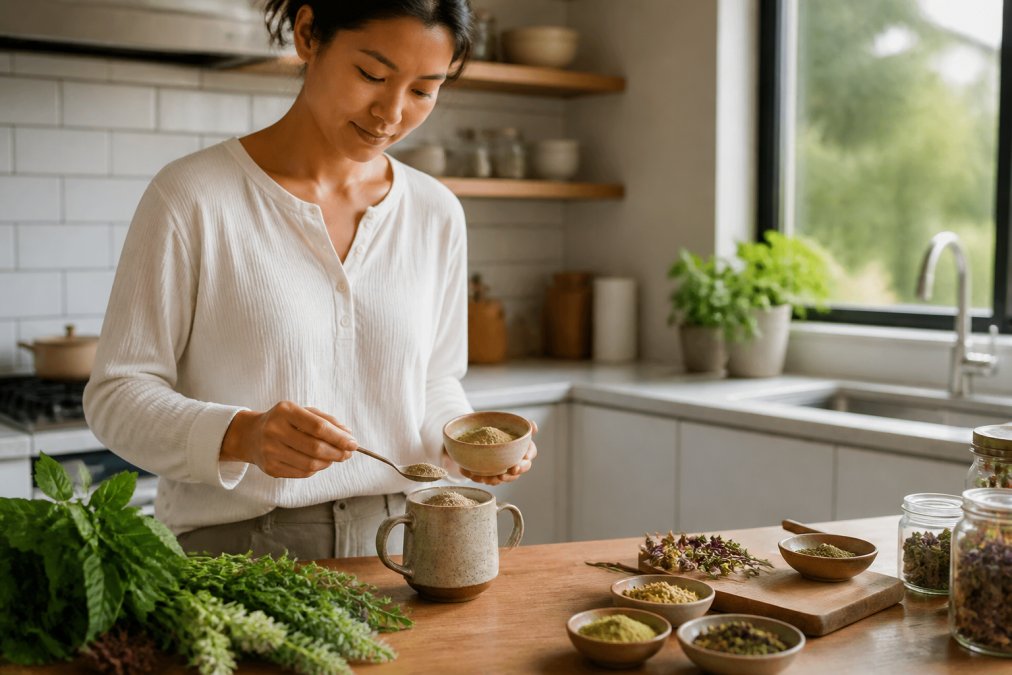
Preparation affects bioavailability. Herbal powders mixed into hot water or tea are often considered more bioavailable than those stirred into cold drinks. Warmth may help your digestive system break down and absorb active compounds more efficiently.
Track your cycle alongside supplementation. Note when you start a new supplement and track energy levels for at least one full cycle.
Dosage consistency beats occasional high doses. One teaspoon of ashwagandha daily is more effective than three teaspoons sporadically.
Expect a timeline. Acute-relief herbs like ginger may work within hours. Adaptogens typically require 2-4 weeks of daily use. Hormonal-support herbs like vitex require 2-3 months.
Which Herbal Powder Should You Choose?
The "best" herbal powder depends on what’s driving your period fatigue.
If your fatigue accompanies severe cramps or nausea: Ginger root powder is a good choice. It may offer relief for multiple symptoms and is affordable. You may notice a difference within 2-3 days if it’s helping.
If your fatigue is tied to stress, anxiety, or sleep issues: Ashwagandha or rhodiola are good options. Ashwagandha is calming; rhodiola is energizing. Both typically require 2-4 weeks of consistent daily use.
If your fatigue pairs with low libido, mood dips, or hormonal imbalance: Maca root powder or vitex address these more directly. Maca may work faster (2-3 weeks); vitex typically requires 2-3 months but is more specific to menstrual regulation.
If you want a comprehensive approach: Cycle 180’s multi-herb blend is designed to address multiple factors simultaneously.

The most effective herbal powder is the one you’ll actually use consistently. A slightly less-optimal supplement taken daily beats the “perfect” supplement you forget about. Choose based on your primary symptom, commit for at least one full cycle, and track results before adding anything else.
Real Considerations: Interactions, Taste, and Bioavailability
Before you buy, understand these practical realities.
Bioavailability varies by form. Herbal powders may have different bioavailability compared to capsules. Standardized extracts (concentrated forms) are generally considered more bioavailable than whole-plant powders.
Taste is a real barrier. Ashwagandha tastes bitter. Rhodiola tastes earthy. Ginger tastes strong. If you hate the taste, you won’t take it consistently.
Contraindications with common medications are real. Ginger has mild blood-thinning properties, caution if on anticoagulants. Ashwagandha affects thyroid function, check with your doctor if on thyroid medication. Vitex can interfere with hormonal birth control. Magnesium can interfere with antibiotic absorption if taken simultaneously.
If you’re on birth control: Vitex is most likely to interfere. Adaptogens like ashwagandha and rhodiola are generally considered safe with birth control.
If you’re experiencing severe dysmenorrhea: A powder supplement might be used as complementary to medical treatment, not a replacement. Severe dysmenorrhea often requires prescription NSAIDs, hormonal birth control, or medical evaluation to rule out endometriosis.
Period fatigue doesn’t have to be inevitable. The right herbal powder, chosen based on your specific symptoms and used consistently, can meaningfully improve your energy throughout your cycle. Start with one, track results over a full cycle, and adjust from there. Your body’s needs are individual.
Cycle 180 offers a comprehensive approach for those seeking a single formula addressing multiple drivers of period fatigue. For targeted approaches, individual herbal powders, ginger for acute inflammation and nausea, ashwagandha or rhodiola for stress and energy, maca for hormonal support, each solve specific problems. Choose based on your symptoms, not hype, and give whatever you choose enough time to work.
Frequently Asked Questions
Q: What herbs help with period fatigue?
A: Red raspberry leaf, ginger, vitex, and adaptogens like ashwagandha and rhodiola rosea are commonly cited herbs for period fatigue. Red raspberry leaf supports uterine health and iron absorption. Ginger reduces inflammation and nausea. Vitex may help regulate progesterone levels, which often dip during the luteal phase and can contribute to fatigue. Adaptogens help your body manage the hormonal shifts that can deplete energy during menstruation. Many women find herbal powders that combine these ingredients can be a beneficial addition to their routine because they address multiple causes of fatigue simultaneously.
Q: How does herbal supplements for hormonal balance reduce period fatigue?
A: Herbal supplements for hormonal balance may work by supporting cortisol regulation, progesterone production, and reducing inflammation during the menstrual cycle. Vitex agnus-castus specifically supports the luteal phase by promoting normal progesterone levels. Adaptogens like ashwagandha help your body adapt to the stress of hormonal shifts without depleting energy reserves. Magnesium and iron-rich herbs address nutritional deficiencies that can worsen fatigue during menstruation. When hormones are balanced, your energy may stay more stable throughout your cycle, and the lethargy that typically accompanies PMS can become much less severe.
Q: Are herbal powders safe to take with birth control?
A: Most herbal powders are generally considered safe with hormonal birth control, but vitex (chasteberry) should be avoided or used cautiously because it may interfere with how your body responds to synthetic hormones. If you're taking birth control and considering a herbal powder supplement, check the ingredient list for vitex first. Ginger, ashwagandha, maca, and rhodiola are generally considered safe with hormonal contraception. Always inform your healthcare provider about any herbal supplements you're considering, especially if you take other medications or have conditions affecting your immune system. Some herbs can interact with blood thinners, blood pressure medications, or anti-anxiety drugs.
Q: How long does it take for herbal powders to reduce period fatigue?
A: The timeline varies by herb and individual. Ginger and magnesium may reduce cramping and improve energy within one or two cycles. Adaptogens like ashwagandha and rhodiola often take 2-4 weeks to noticeably reduce fatigue and stress-related symptoms. Vitex typically requires 3-6 months of consistent use to regulate hormonal shifts and improve luteal phase symptoms because it works on progesterone production over time. Comprehensive blends like Cycle 180, which combine multiple herbs and minerals, may show benefits within 1-2 cycles for immediate symptoms like cramping and bloating, with deeper hormonal support developing over months of use.
Q: Is a powder more effective than capsules for period fatigue?
A: Herbal powders and capsules have different bioavailability profiles. Powders mixed into hot water (as infusions) may have slightly better absorption because heat can increase the extraction of active compounds from herbs. Powders also allow you to control the exact dose and combine multiple herbs in one drink. Capsules offer convenience and consistent dosing but may pass through your digestive system faster. For best results, look for standardized extracts in either form, which guarantee therapeutic dosage of active compounds like rosavins in rhodiola or salidrosides in ashwagandha. The most effective choice depends on your taste preferences and lifestyle, a powder you'll actually drink daily beats a capsule you forget to take.
This article was written using GrandRanker