
Table of Contents
- Understanding Your Endocrine System and Why It Matters
- Signs of Hormonal Imbalance in Women to Watch For
- Foods That Support Endocrine Health
- How to Reduce High Estrogen Levels Naturally
- Sleep, Stress, and Circadian Rhythm Alignment
- Movement and Physical Activity for Hormonal Balance
- Endocrine Disruptors in Your Home and How to Avoid Them
- Lab Testing and Biomarkers to Track Endocrine Health
- Frequently Asked Questions
Last Updated: October 3, 2026
Understanding Your Endocrine System and Why It Matters
Your endocrine system is a network of glands that produce hormones regulating mood, energy, metabolism, and your menstrual cycle. When it works well, you feel balanced with steady energy, even mood, and predictable cycles. But many women experience hormonal imbalance, when hormone production dips, spikes, or gets out of rhythm, causing fatigue, mood swings, irregular periods, and painful cramps.
The good news: you can support endocrine function naturally through diet, sleep, stress management, and lifestyle choices. Targeted nutrition and stress relief can help women regain hormonal balance. This guide walks you through the science-backed strategies that actually work.
Signs of Hormonal Imbalance in Women to Watch For
Common signs include:
- Irregular or missed periods
- Heavy or painful periods
- Persistent fatigue despite adequate sleep
- Mood swings or anxiety
- Brain fog and trouble concentrating
- Unexplained weight gain or difficulty losing weight
- Skin issues like acne or dryness
- Sleep disruption or insomnia
- Low sex drive
- Hot flashes or night sweats
When symptoms cluster or persist for months, your body needs attention. Hormonal imbalance looks different at different life stages, a 25-year-old with irregular periods may have a different root cause than a 45-year-old entering perimenopause. Track your symptoms for at least two months, noting when they occur in your cycle, to identify what’s driving the imbalance.
Foods That Support Endocrine Health
Diet is the foundation of hormonal balance. The foods you eat directly influence hormone production and regulation.
Omega-3 fatty acids and anti-inflammatory foods
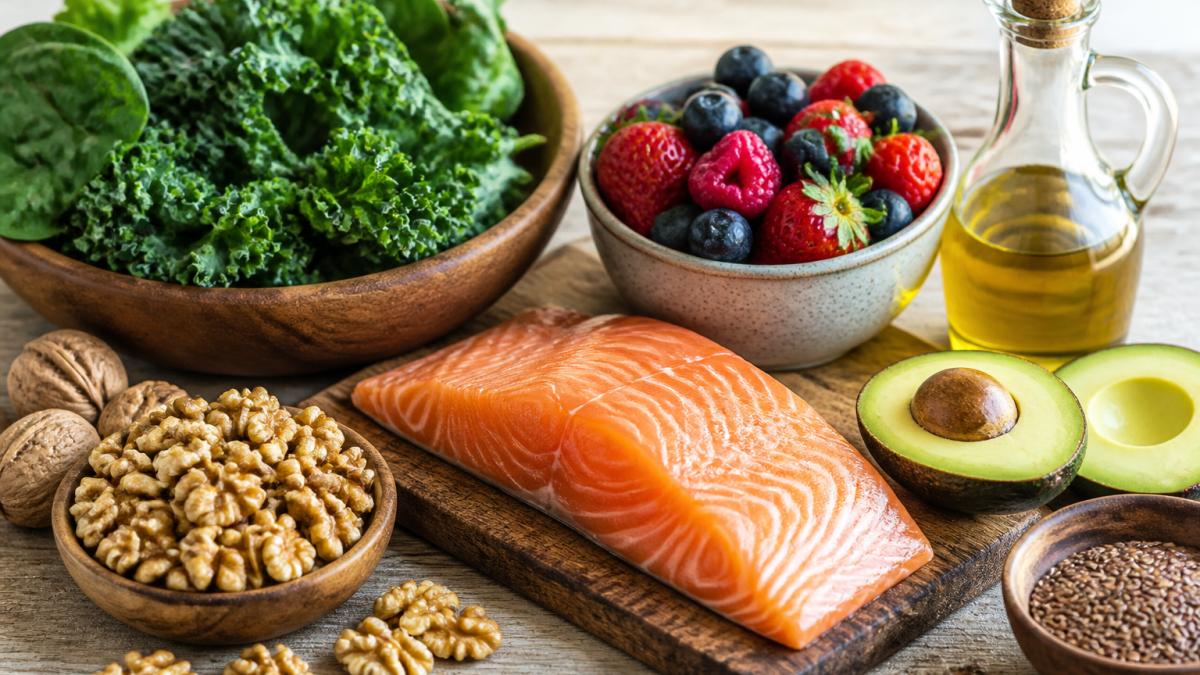
Omega-3 fatty acids reduce inflammation that disrupts hormone signaling. Eat fatty fish (salmon, sardines, mackerel, anchovies) twice weekly, and add walnuts, flaxseeds, chia seeds, grass-fed beef, and pasture-raised eggs to daily meals. Berries, leafy greens, and olive oil further reduce inflammation affecting your endocrine system.
Fiber-rich foods for blood sugar stabilization
Blood sugar swings trigger cortisol spikes, which suppress other hormones needed for balance. Fiber slows sugar absorption, keeping blood sugar and cortisol stable.
Eat these daily:
- Legumes: lentils, chickpeas, black beans
- Whole grains: oats, quinoa, brown rice
- Vegetables: broccoli, Brussels sprouts, sweet potatoes
- Fruits: apples, pears, raspberries
- Ground flaxseed or psyllium husk
Aim for 25-30 grams of fiber per day. Add it gradually to avoid digestive upset.
Micronutrients that support hormone production
Your body needs specific vitamins and minerals to make hormones. Key micronutrients include iron (red meat, spinach, lentils), magnesium (pumpkin seeds, almonds, dark chocolate), zinc (oysters, beef), selenium (Brazil nuts, tuna, eggs), B vitamins (eggs, chicken, mushrooms, leafy greens), and vitamin D (sunlight or supplements). Many women don’t get enough from food alone; deficiency may cause energy issues, irregular cycles, or mood problems.
How to Reduce High Estrogen Levels Naturally
Estrogen dominance, when estrogen levels stay high relative to progesterone, causes bloating, breast tenderness, mood swings, and heavy periods. Your liver processes estrogen; sluggish liver function causes it to recirculate instead of being eliminated.
Support your liver with these strategies:
Eat cruciferous vegetables daily (broccoli, cabbage, Brussels sprouts) to help your liver clear estrogen. Limit alcohol, especially during the luteal phase when estrogen sensitivity is highest. Increase fiber to bind estrogen for elimination. Reduce xenoestrogens (synthetic chemicals in plastics, pesticides, and personal care products that mimic estrogen). Support gut health with fermented foods like sauerkraut, kefir, or kimchi, or a probiotic if antibiotics or stress have disrupted your gut.
Sleep, Stress, and Circadian Rhythm Alignment
Sleep and stress management are not optional for hormonal balance. They’re foundational. But the timing and quality of both matter far more than most wellness articles acknowledge.
Sleep hygiene and hormone production
Your body produces most progesterone during sleep; disrupted sleep drops progesterone and drives PMS and irregular cycles. Aim for 7-9 hours nightly at consistent times. Turn off screens one hour before bed, keep your bedroom cool, dark, and quiet, avoid caffeine after 2 p.m., skip large meals within three hours of sleep, and avoid alcohol. In the luteal phase, you naturally need more sleep, honor that need.
Circadian rhythm alignment and hormonal synchronization
Your circadian rhythm directly controls endocrine function. Misalignment prevents cortisol from peaking in the morning and melatonin from rising at night, disrupting your entire hormonal cascade. Generic sleep advice fails if light exposure is wrong.
Light exposure protocol:
Light is the most powerful circadian regulator.
Temperature protocol:
Core body temperature drives circadian rhythm, naturally dropping in the evening to trigger sleep. Keep your bedroom at 60-67°F (most sleep best at 65-68°F). A warm bath or shower 1-2 hours before bed causes a subsequent temperature drop that signals sleep onset.
Why this matters for hormones:
Aligned circadian rhythm allows cortisol to peak in the morning (energy) and drop at night (sleep). Misalignment flattens this curve, keeping cortisol elevated all day, suppressing progesterone, and disrupting your cycle, common in shift workers and those with irregular schedules.
Stress management and cortisol regulation
Chronic stress elevates cortisol, suppressing progesterone and disrupting your cycle. Stress management is about how your body processes stress, not eliminating it. Try 4-7-8 breathing (inhale 4 counts, hold 7, exhale 8) for five minutes daily, gentle movement like walking or yoga, meditation via apps like Calm, time in nature, and social connection. Circadian rhythm alignment amplifies these techniques by priming your nervous system to respond better.
Movement and Physical Activity for Hormonal Balance
Exercise supports endocrine function; type and timing matter. Aim for 150 minutes weekly of moderate exercise (movement allowing conversation, like brisk walking, cycling, swimming, or dancing) (the CDC). In the follicular phase, your body handles intense exercise better, save HIIT or heavy lifting for this time. In the luteal phase, stick to moderate movement like walking or yoga. Include two rest days weekly; your body produces hormones during recovery, not during workouts.
Endocrine Disruptors in Your Home and How to Avoid Them
Endocrine disruptors are chemicals that mimic or block hormones, found in everyday products. Reduce exposure by using glass or stainless steel instead of plastics (BPA, phthalates), choosing paraben-free and phthalate-free personal care products, eating organic produce (especially the “Dirty Dozen”: strawberries, spinach, kale, peaches, apples, grapes), using cast iron or ceramic cookware instead of non-stick, requesting digital receipts, and opening windows instead of using air fresheners. Start with one or two swaps, these small changes compound over time.
Lab Testing and Biomarkers to Track Endocrine Health
Knowing your hormone levels gives you clarity. It shows whether your efforts are working. But testing without understanding timing, reference ranges, and interpretation is useless. Most women order tests without knowing when to take them or what the numbers actually mean.
Which tests to request and when
Ask your doctor to run these tests. If they’re hesitant, consider working with a functional medicine practitioner who specializes in hormonal health.
Estrogen and progesterone (cycle day-specific):
These must be drawn at the right time in your cycle to be meaningful.
- Progesterone: Draw on day 21 of a 28-day cycle (or 7 days before your period). This is the luteal phase peak. A healthy level is 10-25 ng/mL. Below 10 suggests insufficient progesterone; this drives PMS, irregular cycles, and infertility.
- Estrogen (estradiol): Draw on day 3 (early follicular) and day 21 (luteal). Early follicular should be 25-75 pg/mL; luteal should be 100-300 pg/mL. A flat curve (little rise from follicular to luteal) suggests poor ovulation.
- LH and FSH: Also draw on day 3. These pituitary hormones trigger ovulation. Ratio and absolute values reveal whether your brain is signaling your ovaries correctly.
Thyroid panel (any day):
- TSH, free T3, free T4, TPO antibodies, thyroglobulin antibodies. TSH alone is insufficient; many women have “normal” TSH but low free T3 or T4, or autoimmune thyroiditis (antibodies present). Optimal TSH is 0.5-2.5 mIU/L; free T4 is 0.8-1.8 ng/dL; free T3 is 2.3-4.2 pg/mL.
Cortisol (morning, fasting):
- Draw between 7-9 a.m. before eating or caffeine. Cortisol naturally peaks in the morning. A healthy fasting level is 10-20 mcg/dL. Below 10 suggests adrenal fatigue; above 20 suggests chronic stress or adrenal hyperfunction. A single morning test is a snapshot; a 4-point saliva test (morning, noon, evening, night) reveals your full cortisol curve and is more sensitive to dysregulation.
Fasting glucose and insulin:
- Draw after 8-12 hours fasting. Glucose should be 70-100 mg/dL; fasting insulin should be below 5 mIU/L. Insulin above 10 suggests insulin resistance, which drives weight gain, irregular cycles, and PCOS-like symptoms even without PCOS.
- Calculate HOMA-IR (Homeostatic Model Assessment for Insulin Resistance): (fasting glucose × fasting insulin) / 405. Below 1.0 is healthy; above 2.0 indicates significant insulin resistance.
Vitamin D (any day):
- Most women are deficient. Optimal level is 40-60 ng/mL. Below 30 is deficient; below 20 is severely deficient. Vitamin D deficiency is linked to irregular cycles, poor egg quality, and increased miscarriage risk.
Additional tests to consider:
- Prolactin: Elevated prolactin suppresses progesterone and can cause irregular cycles. Normal is 2-29 ng/mL.
- DHEA-S: This adrenal hormone supports energy and libido. Normal range is 35-430 mcg/dL depending on age.
- Inflammatory markers (CRP, ESR): Chronic inflammation disrupts hormone signaling. High-sensitivity CRP should be below 1.0 mg/L.
How to interpret results and adjust your approach
Once you have results, use them to guide your next steps:
Low progesterone (below 10 ng/mL)?
You may not be ovulating, or ovulation is weak. Increase luteal-phase support: magnesium-rich foods (pumpkin seeds, almonds), vitamin B6 (chickpeas, salmon), and ensure adequate sleep and stress management. If levels don’t rise in 2-3 cycles, discuss ovulation support with your doctor.
High estrogen relative to progesterone?
Focus on liver support and estrogen clearance: cruciferous vegetables daily, 25-30 grams of fiber, and reduce xenoestrogen exposure (plastics, pesticides). Retest in 3 months.
Elevated fasting insulin?
You have insulin resistance. This is often the root cause of irregular cycles and weight gain.
Low vitamin D?
Supplements are necessary. Most women need 2,000-4,000 IU daily to reach optimal levels; some need more. Retest in 8-12 weeks and adjust dose accordingly.
Elevated cortisol?
Your stress management is insufficient. Prioritize sleep, circadian alignment, and parasympathetic activation (breathwork, meditation). If cortisol remains high despite lifestyle changes, discuss with your doctor; chronic elevation can indicate adrenal dysfunction requiring medical support.
Testing timeline and frequency
Test once as a baseline, then retest in three to six months after making changes. This shows whether your diet, sleep, stress management, and lifestyle shifts are actually moving the needle.
For ongoing monitoring, annual testing is reasonable if you’re stable. If you’re actively addressing imbalance, retest every 3 months until values normalize, then annually.
Track your symptoms alongside lab results. Sometimes you feel better before the numbers change, better sleep, clearer skin, more stable mood. Both matter. Symptoms often improve before hormones fully rebalance because lifestyle changes improve overall resilience.
Frequently Asked Questions
What are the signs of poor endocrine function?
Common signs of endocrine dysfunction include irregular menstrual cycles, persistent fatigue despite adequate sleep, unexplained weight gain or difficulty losing weight, mood swings, brain fog, and changes in skin or hair quality. Women may also experience hot flashes, night sweats, or low libido. If you notice a combination of these symptoms, tracking them helps identify patterns and informs conversations with your healthcare provider about potential testing.
How long does it take to see improvements in endocrine health from natural support?
Most women notice subtle shifts in energy, mood, or cycle regularity within 4-8 weeks of consistent dietary and lifestyle changes. More significant improvements in menstrual comfort or hormonal symptoms often take 2-3 months as your body adjusts. Hormonal changes happen gradually; patience and consistency matter more than expecting overnight results. Tracking your cycle and symptoms helps you recognize improvements you might otherwise miss.
Can I use natural endocrine support if I’m already taking birth control?
Natural dietary and lifestyle support for endocrine health generally complements hormonal birth control without interfering. However, certain herbs or supplements can interact with medications. Always discuss any new supplement, including herbal blends, with your healthcare provider before starting, especially if you’re on hormonal contraception. They can review ingredients and dosages specific to your health profile and medication regimen.
Which foods are best for supporting the endocrine system?
Foods rich in omega-3 fatty acids (fatty fish, flaxseeds, walnuts), fiber (leafy greens, legumes, whole grains), and key micronutrients (zinc, selenium, B vitamins) directly support hormone production and regulation. Antioxidant-rich foods like berries and cruciferous vegetables reduce inflammation that can disrupt hormonal balance. Limiting refined sugars and processed foods stabilizes blood sugar, which is foundational for healthy cortisol and insulin sensitivity.