
Table of Contents
- Can Herbal Powder Replace Ibuprofen?
- How Natural Anti-Inflammatory Herbs for Pain Work
- Herbal Supplements for Hormonal Balance and Menstrual Relief
- Herbal Powder vs. Ibuprofen: What the Evidence Shows
- Safety, Side Effects, and Drug Interactions
- FDA Regulation of Dietary Supplements and What It Means
- When to Use Herbal Powder, When to Stick with Ibuprofen
- Conclusion
Last Updated: August 26, 2026
Can Herbal Powder Replace Ibuprofen?
Whether herbal powder can replace ibuprofen depends on your pain severity, underlying health conditions, and how your body responds to natural remedies. For mild to moderate menstrual discomfort, many women find herbal powders effective. For severe pain or acute inflammation, ibuprofen often delivers faster, more predictable relief. The real question isn’t whether herbal powder can replace ibuprofen, but whether it should for your specific situation. Herbal supplements work through different mechanisms than NSAIDs, they tend to build effectiveness over time with consistent use, while ibuprofen provides immediate relief. Some women use both strategically; others find that daily herbal support eliminates the need for pain medication altogether.
This guide covers what the evidence shows, how to evaluate whether herbal powder makes sense for you, and when sticking with ibuprofen is the safer choice. We’ll also address drug interactions, FDA oversight, and the practical reality of using supplements for menstrual health.
How Natural Anti-Inflammatory Herbs for Pain Work
Natural anti-inflammatory herbs contain phytochemicals that reduce inflammation through different pathways than synthetic NSAIDs. Rather than blocking cyclooxygenase (COX) enzymes like ibuprofen does, many herbal compounds modulate prostaglandins, reduce cytokine production, or support the body’s natural inflammatory response.
Ginger contains gingerols and shogaols, compounds that inhibit inflammatory markers. Turmeric’s curcumin has been extensively studied for anti-inflammatory properties. Cramp bark and black cohosh contain salicin and alkaloids that relax smooth muscle tissue. Willow bark naturally contains salicin, structurally similar to aspirin but gentler on the gastrointestinal system.
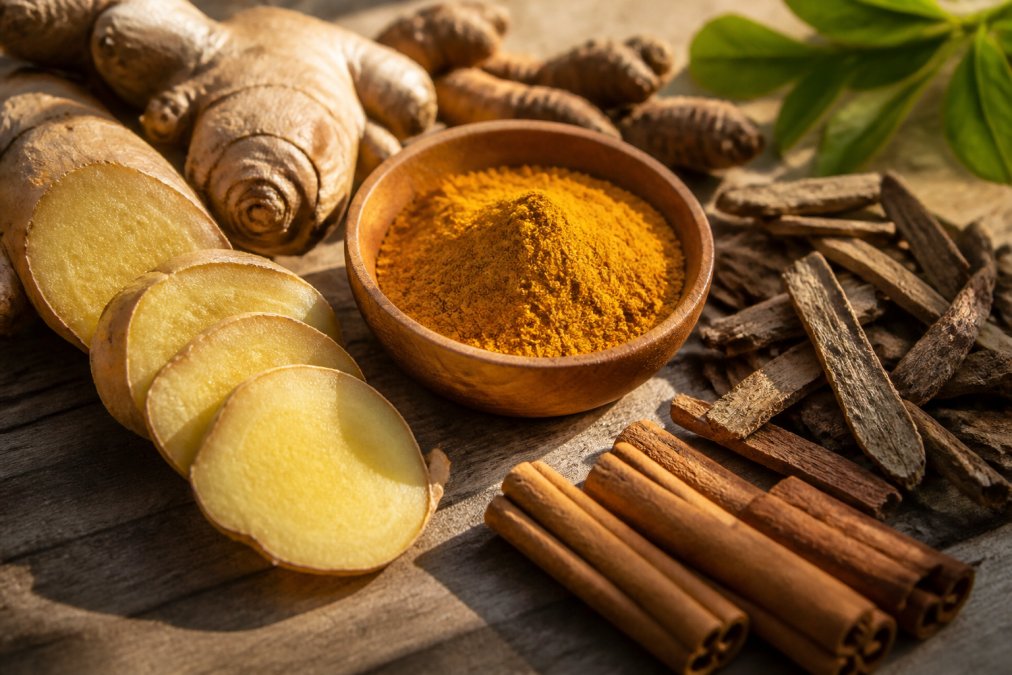
The bioavailability of herbal compounds depends on whether the herb is a standardized extract (concentrated and measured for consistent potency), how it’s prepared, whether you take it with food, and your individual digestive capacity. A standardized extract of curcumin delivers more reliable results than loose turmeric powder because the active compound concentration is controlled and verified.
Herbal anti-inflammatories typically require consistent use to build effectiveness. Most women don’t notice significant relief from a single dose. Instead, these compounds accumulate in your system over days or weeks, gradually reducing baseline inflammation. This makes them better suited for preventative daily use rather than acute crisis management.
Standardized herbal extracts list the percentage or amount of active compounds on the label (e.g., “95% curcuminoids” or “0.5% salicin”). This transparency indicates quality control and consistent potency.
Herbal Supplements for Hormonal Balance and Menstrual Relief
Menstrual pain stems from uterine contractions (prostaglandin-driven) and systemic inflammation in the pelvic region. Herbal formulations designed for menstrual wellness address both mechanisms simultaneously. Rather than targeting pain alone, they support hormonal balance throughout your cycle, reducing symptom severity when your period arrives.
This preventative approach differs fundamentally from taking ibuprofen on day one of your period. With herbal support, you’re building a foundation of hormonal stability and reduced baseline inflammation. By the time menstruation begins, your system is already primed to handle it better. Women who take daily herbal support often report lighter, shorter periods and less severe cramping.
Key Herbs in Menstrual Wellness Formulas
Red raspberry leaf is rich in fragarine, an alkaloid that strengthens uterine muscles and potentially reduces contraction intensity. Ginger reduces prostaglandin production, directly addressing the inflammatory cascade that triggers cramping. Cramp bark relaxes smooth muscle tissue in the uterus and supports healthy pelvic circulation.
Cinnamon helps regulate blood sugar and may support hormonal balance. Black cohosh contains phytoestrogens that stabilize hormonal fluctuations. Licorice root supports adrenal function and cortisol balance, which influences how your body handles stress-related hormonal disruption. Yarrow has astringent and anti-inflammatory properties that reduce excessive bleeding and support pelvic health.
Cycle 180 provides women with an all natural powdered dietary supplement made with a blend of herbs, vitamins, and minerals designed to support menstrual wellness, comfort, and overall well being throughout the monthly cycle. The powdered format allows you to customize serving size and mix it into water, tea, or smoothies, making daily consistency easier than managing multiple capsules.
The most effective herbal formulas combine multiple herbs targeting different aspects of menstrual health: muscle relaxation, inflammation reduction, hormonal balance, and circulation support.
Herbal Powder vs. Ibuprofen: What the Evidence Shows
Ibuprofen blocks COX-1 and COX-2 enzymes, rapidly shutting down prostaglandin production and delivering pain relief within 30-60 minutes (peer-reviewed research). The effect is consistent and predictable. Herbal anti-inflammatories work more gradually, modulating inflammatory signaling rather than blocking enzyme pathways. This means relief is less dramatic but potentially more sustainable. Women using herbal powders consistently often report that their baseline pain decreases over time, meaning they need fewer emergency interventions.
For mild to moderate cramping, many women find herbal powder sufficient, especially if they’ve used it daily for several weeks before menstruation. For severe dysmenorrhea, ibuprofen typically delivers more reliable acute relief. Some women use both strategically: daily herbal powder for baseline support and ibuprofen on days when pain breaks through.
Research on herbal alternatives to NSAIDs is growing but remains limited compared to pharmaceutical data. Studies on ginger, turmeric, and cramp bark show promise for reducing menstrual pain, but most are small or conducted outside the U.S. regulatory framework. One advantage of herbal powder: it doesn’t carry the gastrointestinal risks associated with long-term NSAID use. Chronic ibuprofen use can damage the stomach lining and increase ulcer risk. Herbal formulations generally have a gentler safety profile for extended use.
Safety, Side Effects, and Drug Interactions
Herbal supplements are generally well-tolerated, but common side effects include mild digestive upset, especially if taken on an empty stomach. Some women report a slight warming sensation or mild nausea with ginger-heavy formulas, which typically diminish after a few days.
More serious concerns involve drug interactions. If you’re taking birth control, blood thinners, diabetes medications, or blood pressure medications, certain herbs can interfere with their effectiveness or increase side effects. Ginger can have mild blood-thinning properties, which matters if you’re already taking anticoagulants. Licorice can raise blood pressure in some people. Black cohosh may interact with hormone-sensitive conditions.
Unlike medications, supplements don’t undergo the same rigorous testing for interactions before reaching the market. Manufacturers are responsible for safety, but the burden of proof is lighter. Check the label for all ingredients, research potential interactions with your specific medications, and discuss herbal supplements with your healthcare provider before starting.
If you’re taking prescription medications, especially blood thinners, birth control, or medications for chronic conditions, consult your doctor before starting any herbal powder. Some herb-drug interactions can reduce medication effectiveness or increase adverse effects.
Quality and contamination are legitimate concerns. Reputable manufacturers conduct third-party testing and publish results. If a product doesn’t list third-party testing or makes vague claims about ingredient sourcing, that’s a red flag.
FDA Regulation of Dietary Supplements and What It Means
The FDA classifies herbal powders and other dietary supplements differently than medications. Under the Dietary Supplement Health and Education Act (DSHEA), manufacturers can sell supplements without proving they’re safe or effective before reaching the market (the FDA). The FDA can only take action if a supplement is proven unsafe after it’s already being sold.
This regulatory gap means consumers bear more responsibility for evaluating quality and safety. The FDA requires that supplement labels include ingredient lists and cannot make disease claims (e.g., "cures menstrual pain" is illegal, but "supports menstrual wellness" is permitted). Manufacturers must follow current Good Manufacturing Practices (cGMP) to ensure products are made consistently and safely.
Herbal powders for menstrual support are legal and widely available, but the evidence supporting them isn’t vetted by the FDA the way medication evidence is. This doesn’t mean they don’t work; many women report genuine relief. It means you’re making an informed choice based on individual experience and smaller-scale research rather than large clinical trials.
FDA guidance on dietary supplements
When to Use Herbal Powder, When to Stick with Ibuprofen

Choose herbal powder when you’re experiencing mild to moderate menstrual discomfort and you’re willing to use it consistently for several weeks before expecting significant results. Herbal powder works best as a preventative tool, taken daily throughout your cycle. If you’ve been using it consistently and notice your baseline pain decreasing, continue the routine.
Use herbal powder if you want to avoid the gastrointestinal risks of long-term NSAID use. If you’re taking ibuprofen multiple times per month for years, herbal alternatives may be gentler on your stomach and intestinal lining.
Stick with ibuprofen when you need immediate relief from severe pain. If you’re experiencing debilitating cramping and you need to function today, ibuprofen is the more reliable choice. Use ibuprofen if you have contraindications to specific herbs, for example, if you’re on blood thinners and concerned about ginger’s mild anticoagulant effect.
Consider a hybrid approach: use herbal powder daily for baseline support and prevention, then take ibuprofen only on days when pain breaks through. This strategy leverages the strengths of both approaches while minimizing overall medication use. Some women discover that after three to six months of consistent herbal powder use, their menstrual pain decreases so significantly that they rarely need ibuprofen anymore.
Herbal powder works best for women with mild to moderate menstrual discomfort who are willing to commit to daily use for at least 4-6 weeks before evaluating effectiveness. It’s ideal for those seeking to avoid long-term NSAID use and those interested in supporting overall hormonal balance.
Menstrual pain management isn’t binary. You don’t have to choose between herbal powder and ibuprofen; you can use both strategically based on your needs. Herbal powder provides gentle, preventative support that improves over time, while ibuprofen delivers fast, reliable acute relief. Cycle 180’s powdered formula combines 19 herbs, vitamins, and minerals specifically selected to support menstrual wellness and hormonal balance throughout your cycle. Start with consistent daily use and track your symptoms over 4-6 weeks to see whether herbal support reduces your baseline pain. If you’re managing severe dysmenorrhea, discuss your options with your healthcare provider to determine whether herbal supplements make sense alongside or instead of your current pain management approach.
== FAQ ANSWERS (audit these too, same rules) ==
[1] Q: Can herbal powder completely replace ibuprofen for severe period pain?
A: Herbal powders can support menstrual comfort, but severe dysmenorrhea often requires stronger intervention. Ibuprofen works as a cyclooxygenase (COX) inhibitor to block prostaglandins that cause intense cramping, while herbal supplements provide anti-inflammatory and analgesic support through phytochemicals like gingerols and curcumin. For severe pain, herbal powder may work best alongside medical advice rather than as a complete replacement. Discuss your symptoms with a healthcare provider to determine the right approach for your pain level.
[2] Q: Will herbal supplements for hormonal balance interact with birth control?
A: Most herbs in menstrual wellness formulas are generally safe with hormonal birth control, but some warrant caution. Certain ingredients like black cohosh and licorice root may have mild estrogenic effects. If you take birth control pills, discuss any new herbal supplement with your doctor or pharmacist, especially if you experience changes in bleeding patterns or side effects. They can review your specific formula and medications to identify potential drug-herb interactions and ensure your birth control remains effective.
[3] Q: How long does it take to notice results from herbal powder supplements?
A: Timeline varies by individual and product formulation. Some women report feeling relief within the first cycle, while others notice cumulative benefits over 2-3 months of consistent use. Herbal supplements often work best as preventative support taken daily rather than as acute pain relief. Bioavailability of herbal extracts also affects how quickly your body absorbs and uses the active compounds. For best results, use the supplement as directed and track your symptoms across multiple cycles to assess effectiveness.
[4] Q: What does FDA regulation of dietary supplements mean for safety and quality?
A: Dietary supplements, including herbal powders, are regulated by the FDA differently than prescription medications. Manufacturers must ensure products are safe and label claims are truthful, but supplements don’t require FDA approval before sale. Look for third-party testing certifications from organizations like NSF, USP, or ConsumerLab, and standardized extract labels showing active compound concentrations. Check the supplement facts label for ingredient sourcing and potency. This means you should research individual brands and verify quality independently, as regulation focuses on safety rather than efficacy proof.
Frequently Asked Questions
Can herbal powder completely replace ibuprofen for severe period pain?
Herbal powders can support menstrual comfort, but severe dysmenorrhea often requires stronger intervention. Ibuprofen works as a cyclooxygenase (COX) inhibitor to block prostaglandins that cause intense cramping, while herbal supplements provide anti-inflammatory and analgesic support through phytochemicals like gingerols and curcumin. For severe pain, herbal powder may work best alongside medical advice rather than as a complete replacement. Discuss your symptoms with a healthcare provider to determine the right approach for your pain level.
Will herbal supplements for hormonal balance interact with birth control?
Most herbs in menstrual wellness formulas are generally safe with hormonal birth control, but some warrant caution. Certain ingredients like black cohosh and licorice root may have mild estrogenic effects. If you take birth control pills, discuss any new herbal supplement with your doctor or pharmacist, especially if you experience changes in bleeding patterns or side effects. They can review your specific formula and medications to identify potential drug-herb interactions and ensure your birth control remains effective.
How long does it take to notice results from herbal powder supplements?
Timeline varies by individual and product formulation. Some women report feeling relief within the first cycle, while others notice cumulative benefits over 2-3 months of consistent use. Herbal supplements often work best as preventative support taken daily rather than as acute pain relief. Bioavailability of herbal extracts also affects how quickly your body absorbs and uses the active compounds. For best results, use the supplement as directed and track your symptoms across multiple cycles to assess effectiveness.
What does FDA regulation of dietary supplements mean for safety and quality?
Dietary supplements, including herbal powders, are regulated by the FDA differently than prescription medications. Manufacturers must ensure products are safe and label claims are truthful, but supplements don't require FDA approval before sale. Look for third-party testing certifications from organizations like NSF, USP, or ConsumerLab, and standardized extract labels showing active compound concentrations. Check the supplement facts label for ingredient sourcing and potency. This means you should research individual brands and verify quality independently, as regulation focuses on safety rather than efficacy proof.
This article was written using GrandRanker