
Table of Contents
- Diet Plans vs Supplements for Hormonal Balance: The Core Differences
- How to Balance Hormones Naturally Through Food
- Herbal Supplements for Hormonal Balance: What the Evidence Shows
- Combining Diet and Supplements: A Practical Framework
- Real Results: Timeline and What to Expect
- Which Approach Is Right for Your Situation
- Frequently Asked Questions
Last Updated: October 6, 2026
Diet Plans vs Supplements for Hormonal Balance: The Core Differences
When you’re managing menstrual discomfort, irregular cycles, or perimenopausal symptoms, you face a fundamental choice between a hormonal balance diet plan vs supplement approach, or combining both.
A hormonal balance diet plan vs supplement routine represents two distinct philosophies. Diet plans address hormonal health through food choices, meal timing, and nutrient density. They work by stabilizing blood sugar, reducing inflammatory foods, and ensuring you consume the micronutrients your body needs to produce and regulate hormones naturally.
Here’s what separates them:
Diet Plans require consistent effort but offer systemic benefits. You’re rebuilding your nutritional foundation, which affects energy, mood, digestion, and hormone production. The downside: results take weeks or months, and you need to plan meals, shop intentionally, and stick to new eating patterns. Supplements work faster and require minimal lifestyle change. You add a powder or pill to your routine and continue as normal. The trade-off is that supplements alone don’t address underlying dietary gaps or lifestyle factors that drive hormonal imbalance.
The research-backed answer is that both matter. Food provides the raw materials your body needs. Supplements fill specific gaps and target acute symptoms. This guide walks you through how to evaluate each approach, what the evidence actually shows, and how to build a practical plan that fits your situation.
How to Balance Hormones Naturally Through Food
Food is your most powerful tool for hormonal health. The nutrients you consume directly influence hormone production, metabolism, and how your body processes estrogen, progesterone, and other key hormones. Unlike supplements, which target symptoms, dietary changes address root causes.
The mechanism is straightforward: balanced blood sugar stabilizes insulin, which in turn regulates cortisol and reproductive hormones. Anti-inflammatory foods reduce the systemic inflammation that worsens PMS and period pain. Adequate protein and healthy fats provide the building blocks for hormone synthesis. Fiber supports gut health, which is critical for hormone metabolism, your gut bacteria actually help reabsorb and recycle estrogen.
Nutrient-Dense Foods That Support Hormone Function
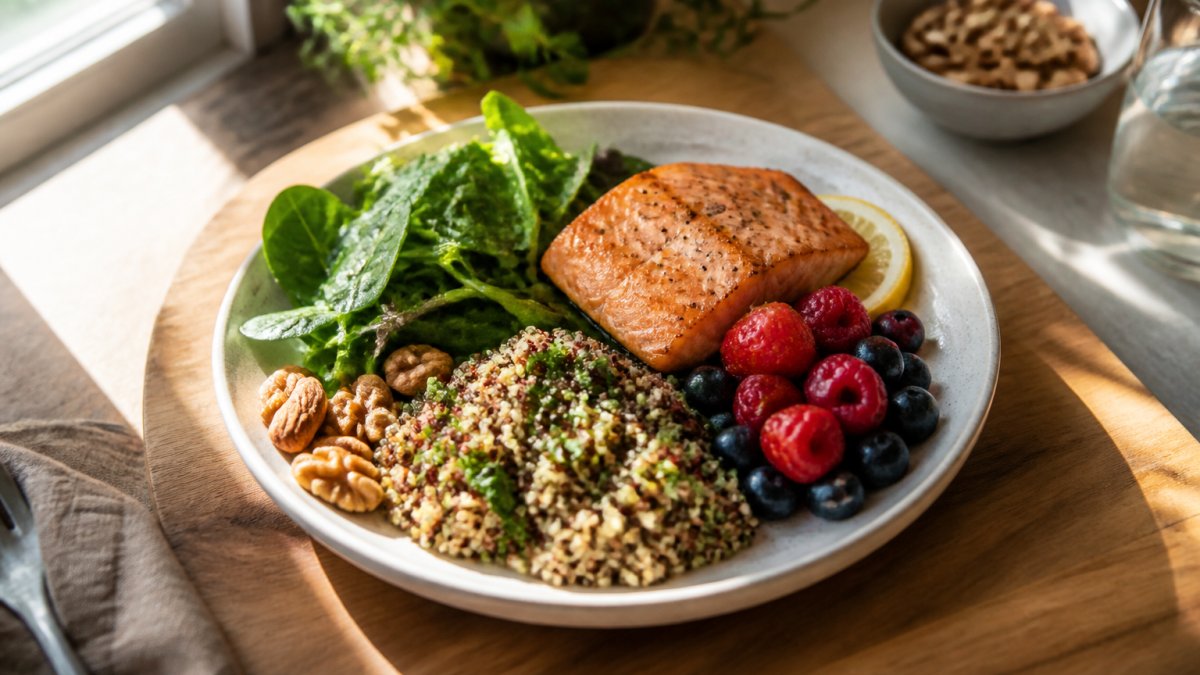
Focus on whole foods that deliver multiple hormonal benefits in a single serving. Leafy greens like spinach and kale are rich in magnesium, a mineral that reduces muscle tension and supports progesterone production. Fatty fish, salmon, mackerel, sardines, provide omega-3 fatty acids that reduce inflammation and support neurotransmitter balance. Eggs contain choline and selenium, both critical for hormone metabolism. Berries deliver antioxidants that protect against oxidative stress, which disrupts hormonal signaling. Nuts and seeds provide magnesium, zinc, and healthy fats.
The pattern matters as much as the individual foods. A meal with protein, healthy fat, and fiber keeps blood sugar stable for hours. A meal of refined carbohydrates alone causes a spike-and-crash cycle that stresses your hormonal system.
Sample Hormone-Balancing Meal Plan
A practical three-day sample shows how to structure meals for hormonal support:
Day 1:
- Breakfast: Scrambled eggs with spinach, whole grain toast, and avocado
- Lunch: Grilled salmon with quinoa and roasted broccoli
- Dinner: Chicken breast with sweet potato and sautéed kale
- Snack: Almonds and blueberries
Day 2:
- Breakfast: Oatmeal with walnuts, berries, and ground flaxseed
- Lunch: Turkey and vegetable stir-fry with brown rice
- Dinner: Baked mackerel with wild rice and roasted Brussels sprouts
- Snack: Greek yogurt with pumpkin seeds
Day 3:
- Breakfast: Greek yogurt with granola and mixed berries
- Lunch: Lentil and vegetable soup with whole grain bread
- Dinner: Lean beef with sweet potato and sautéed bok choy
- Snack: Almonds and an apple
The consistency of this approach, eating balanced meals three times daily, matters more than perfection. You’re aiming for steady energy, stable mood, and reduced symptom severity over 4-8 weeks.
Start with breakfast. A protein-rich morning meal with healthy fat and fiber sets your hormonal tone for the day. Women who eat a balanced breakfast report fewer afternoon energy crashes and reduced evening cravings, both signs of more stable hormones.
Herbal Supplements for Hormonal Balance: What the Evidence Shows
Herbal supplements for hormonal balance have a long history of use, but the evidence varies widely. Some ingredients have solid research backing specific symptom relief. Others rely on traditional use with minimal clinical data. Understanding which is which helps you make an informed choice.
The most studied herbal ingredients for menstrual and hormonal health include chaste berry (Vitex), which shows promise for PMS symptom relief; myo-inositol, which supports ovulatory function and may reduce PCOS symptoms; magnesium, which reduces muscle tension and supports progesterone action; and black cohosh, traditionally used for menopausal symptoms.
The evidence quality varies. Some ingredients have multiple randomized controlled trials. Others have only observational studies or traditional use supporting them. This doesn’t mean they don’t work, it means the certainty level differs.
Key Ingredients and Their Roles
Magnesium reduces muscle tension, supports serotonin production, and helps regulate progesterone. Many women with PMS are magnesium-deficient. Supplementing magnesium often reduces cramping within one to two cycles.
Myo-inositol supports insulin sensitivity and ovulatory function. It’s particularly relevant for women with PCOS or irregular cycles. Research suggests it takes 8-12 weeks to see meaningful changes in cycle regularity.
Chaste berry (Vitex) has been used for centuries to support progesterone production and reduce PMS symptoms. Some studies show it reduces bloating, breast tenderness, and mood changes, though effect sizes vary.
Vitamin D supports immune function and hormone metabolism. Many women are deficient, especially in winter months. Supplementing vitamin D is a low-risk intervention with broad health benefits beyond hormonal health.
Omega-3 fatty acids reduce inflammation and support mood. They’re particularly helpful for women with severe period pain or mood-related PMS symptoms.
The practical reality: individual response varies.
Safety, Interactions, and When to Consult Your Doctor
Most herbal supplements are safe for most women, but interactions and contraindications exist. If you take hormonal birth control, certain supplements, particularly high-dose vitex or large amounts of omega-3s, may theoretically interfere with medication efficacy, though clinical evidence of significant interaction is limited.
Pregnancy and breastfeeding change the safety calculation entirely. Many herbal supplements lack safety data in pregnancy and should be avoided. If you’re trying to conceive, pregnant, or breastfeeding, discuss any supplement plan with your healthcare provider before starting.
The conversation to have with your doctor: “I’m considering adding supplements to support my menstrual health. Here’s what I’m thinking of taking. Do you see any interactions with my current medications or health conditions?” Most healthcare providers appreciate this directness and can flag real concerns quickly.
If you have severe dysmenorrhea, endometriosis, or PCOS, supplements are a complement to medical care, not a replacement. These conditions often benefit from prescription medication, physical therapy, or other interventions. Talk to your doctor about how supplements fit into your overall treatment plan.
Combining Diet and Supplements: A Practical Framework
The most effective approach for most women combines dietary changes with targeted supplementation. Here’s how to build that framework:
Step 1: Establish baseline symptoms. Track your cycle for one month before making changes. Note pain severity (1-10 scale), energy levels, mood, bloating, and any other relevant symptoms. This baseline lets you measure whether changes actually help.
Step 2: Optimize diet first. Spend 2-4 weeks eating balanced, nutrient-dense meals without adding supplements. Many women see meaningful improvement from diet alone. If symptoms improve sufficiently, you may not need supplements.
Step 3: Add one supplement at a time. If diet alone doesn’t solve the problem, introduce a single supplement, magnesium, for example, and track symptoms for 4-6 weeks.
Step 4: Evaluate and adjust. After 6-8 weeks, compare your current symptoms to your baseline. Did pain decrease? Did energy improve? Did mood stabilize? If yes, continue. If no, try a different supplement or revisit your dietary consistency.
The timeline matters. Dietary changes take 4-8 weeks to show effects. Supplements take 4-12 weeks depending on the ingredient. Expecting results in one or two weeks sets you up for disappointment.
| Approach | Timeline | Effort | Cost | Best For |
|---|---|---|---|---|
| Diet only | 4-8 weeks | High (meal planning, shopping) | Low | Mild symptoms, willing to commit to food changes |
| Supplements only | 4-12 weeks | Low (add to routine) | Moderate | Busy schedules, want targeted symptom relief |
| Diet + Supplements | 4-8 weeks | Moderate | Moderate | Severe symptoms, want comprehensive approach |
Real Results: Timeline and What to Expect
Hormonal changes don’t happen overnight.
Weeks 1-2: You likely won’t notice much. Your body is adjusting to new foods or new supplements. Some women report feeling slightly better or having more stable energy, but this isn’t universal.
Weeks 3-4: If you’re tracking carefully, you might notice reduced bloating or slightly less severe cramping. Mood may feel more stable.
Weeks 5-8: By the second or third cycle of consistent changes, patterns become clearer. Women often report noticeably reduced period pain, less severe PMS symptoms, and more stable energy throughout the month.
Weeks 9-12: Continued consistency often yields further improvement. Some women reach a point where symptoms are minimal.
The honest truth: not every woman sees dramatic results from diet and supplements alone. Some do. Many see meaningful but partial improvement. A smaller percentage sees little change.
Which Approach Is Right for Your Situation
Your choice depends on symptom severity, lifestyle, and how quickly you need relief.
For Mild to Moderate PMS and Menstrual Discomfort
If your symptoms are manageable but bothersome, moderate cramping, mild bloating, some mood changes, diet changes alone often help. Commit to four weeks of consistent, nutrient-dense eating focused on the foods mentioned above. Track your symptoms carefully. Many women see meaningful improvement without adding supplements.
If diet alone doesn’t fully resolve symptoms after 4-6 weeks, add magnesium supplementation. It’s low-cost, well-tolerated, and has solid evidence for reducing cramping. Cycle 180 combines magnesium with other supportive herbs and vitamins in a single powder.
For Severe Dysmenorrhea or Perimenopausal Symptoms
Severe pain, heavy bleeding, or significant mood disruption during perimenopause warrant medical evaluation first. Talk to your doctor before relying on diet and supplements alone. That said, dietary changes and supplements can meaningfully complement medical treatment.
For severe dysmenorrhea specifically, diet changes alone are unlikely to be sufficient.
For perimenopause, the picture is more complex. Hormonal fluctuations are driving symptoms, and diet can help stabilize blood sugar and reduce inflammatory triggers, but supplements targeting menopausal symptoms, black cohosh, for example, may be more directly relevant than supplements designed for menstrual pain.
The best approach is the one you’ll actually stick with. A perfect diet you abandon after three weeks helps no one. A supplement routine you forget is worthless. Start with changes you can sustain, track your results, and adjust based on what you observe in your own body.
Building a hormonal wellness strategy that works means moving beyond quick fixes toward sustainable habits. Diet and supplements are tools, not magic. They work best when combined with adequate sleep, stress management, and regular movement.
Frequently Asked Questions
Can a diet plan alone balance hormones without supplements?
A nutrient-dense diet supports hormone function through protein, healthy fats, fiber, and micronutrients like magnesium and vitamin D. For mild hormonal symptoms, dietary changes often help. However, severe PMS, dysmenorrhea, or menopause symptoms may require additional support. The answer depends on your symptom severity and individual biochemistry. Consulting a healthcare provider helps determine whether diet alone is sufficient for your situation.
How long does it take to see results from hormonal balance diet changes?
Most women notice mood and energy shifts within 2-3 weeks of consistent dietary changes. Menstrual symptom improvements typically appear after 1-2 full cycles (4-8 weeks) as hormone levels stabilize. Results vary based on starting point, adherence, and individual metabolism. Herbal supplements for hormonal balance often show similar timelines. Tracking symptoms in a journal helps identify patterns and confirm whether changes are working.
What makes Cycle 180 different from other hormonal balance supplements?
Cycle 180 is a powdered blend of herbs, vitamins, and minerals formulated specifically for menstrual wellness throughout the monthly cycle. It combines multiple supportive compounds in one daily dose. The all-natural formulation targets comfort, energy, and overall well-being. For ingredient details, visit Cycle 180’s website or consult the product documentation to evaluate fit for your needs.
Are there risks to taking hormonal balance supplements without medical guidance?
Herbal supplements can interact with birth control, thyroid medication, and other prescriptions. Some ingredients may cause side effects or aren’t appropriate during certain life stages. Women taking hormonal medications should discuss any new supplement with their doctor before starting. Third-party testing and quality sourcing matter for safety. When in doubt, ask your healthcare provider whether a specific supplement is safe alongside your current medications and health conditions.